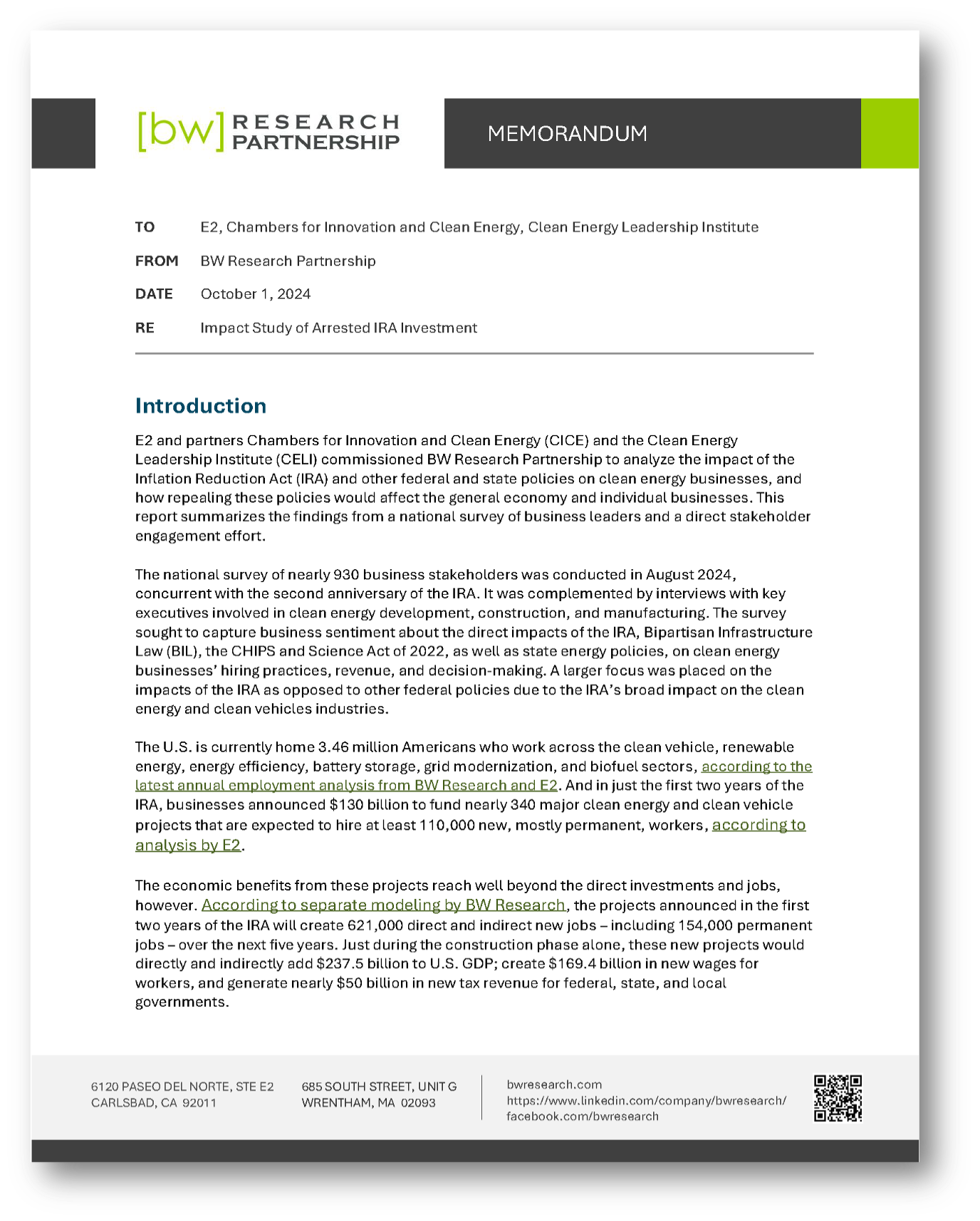
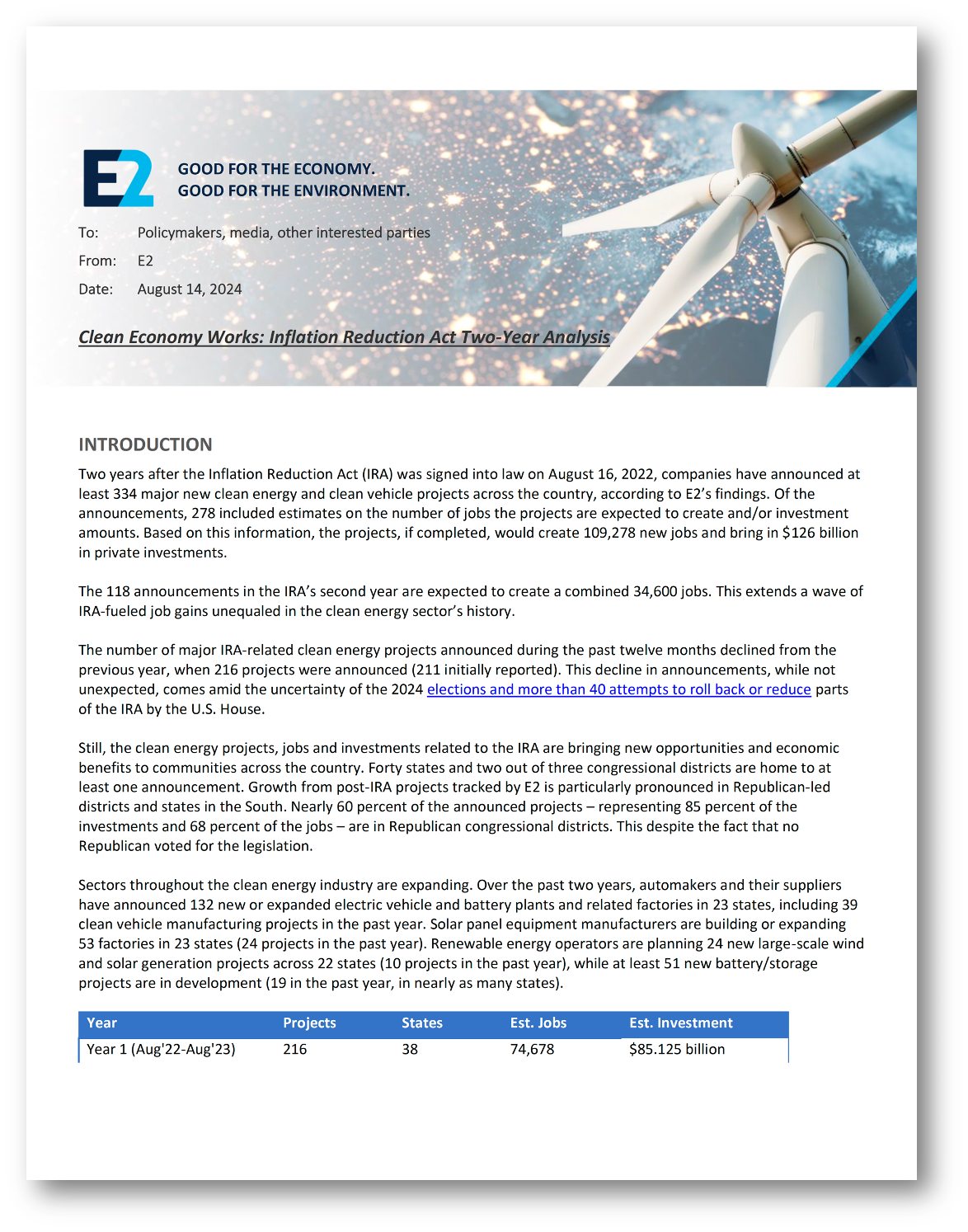
The U.S. is currently home 3.46 million Americans who work across the clean vehicle, renewable energy, energy efficiency, battery storage, grid modernization, and biofuel sectors, according to the latest annual employment analysis from BW Research and E2. And in just the first two years of the IRA, businesses announced $130 billion to fund nearly 340 major clean energy and clean vehicle projects that are expected to hire at least 110,000 new, mostly permanent, workers, according to analysis by E2.
The economic benefits from these projects reach well beyond the direct investments and jobs, however. According to separate modeling by BW Research, the projects announced in the first two years of the IRA will create 621,000 direct and indirect new jobs – including 154,000 permanent jobs – over the next five years. Just during the construction phase alone, these new projects would directly and indirectly add $237.5 billion to U.S. GDP; create $169.4 billion in new wages for workers, and generate nearly $50 billion in new tax revenue for federal, state, and local governments.
To gauge business sentiment on how repealing or rolling back the IRA would impact business investment, hiring, and expansion plans, BW Research focused its outreach on firms working with the following technologies: energy efficiency of buildings, renewable electricity generation, energy storage, grid, renewable fuels, and electric or alternative transportation. The survey captured impacts not just on new businesses or projects since the laws were signed but on long-established companies, with more than 60 percent of the surveyed firms saying they have been in business in the clean energy space for more than ten years.
The executive interviews conducted in parallel with the survey helped reveal other common themes that business owners and decision-makers have seen since the passage of the IRA, as well as key issues for them as they contemplate their businesses’ future. The stakeholder engagement process involved energy businesses in different technologies and regions of the country.
Lastly, the repeal or rollback of the IRA would have impacts that extend far beyond hiring, investment, and expansion plans. In addition to the benefits to businesses created by the IRA, the policy has sent a clear market signal for companies to invest, innovate, and expand in America.
If the policy is repealed, some executives surveyed said they would have to relocate their companies to another country. Others said they would go out of business entirely. Rural areas and small communities across America would be hurt the worst, since rural areas have seen the biggest uptick in clean energy projects, investments and jobs since the IRA.