Clean Jobs Georgia 2025
Summary
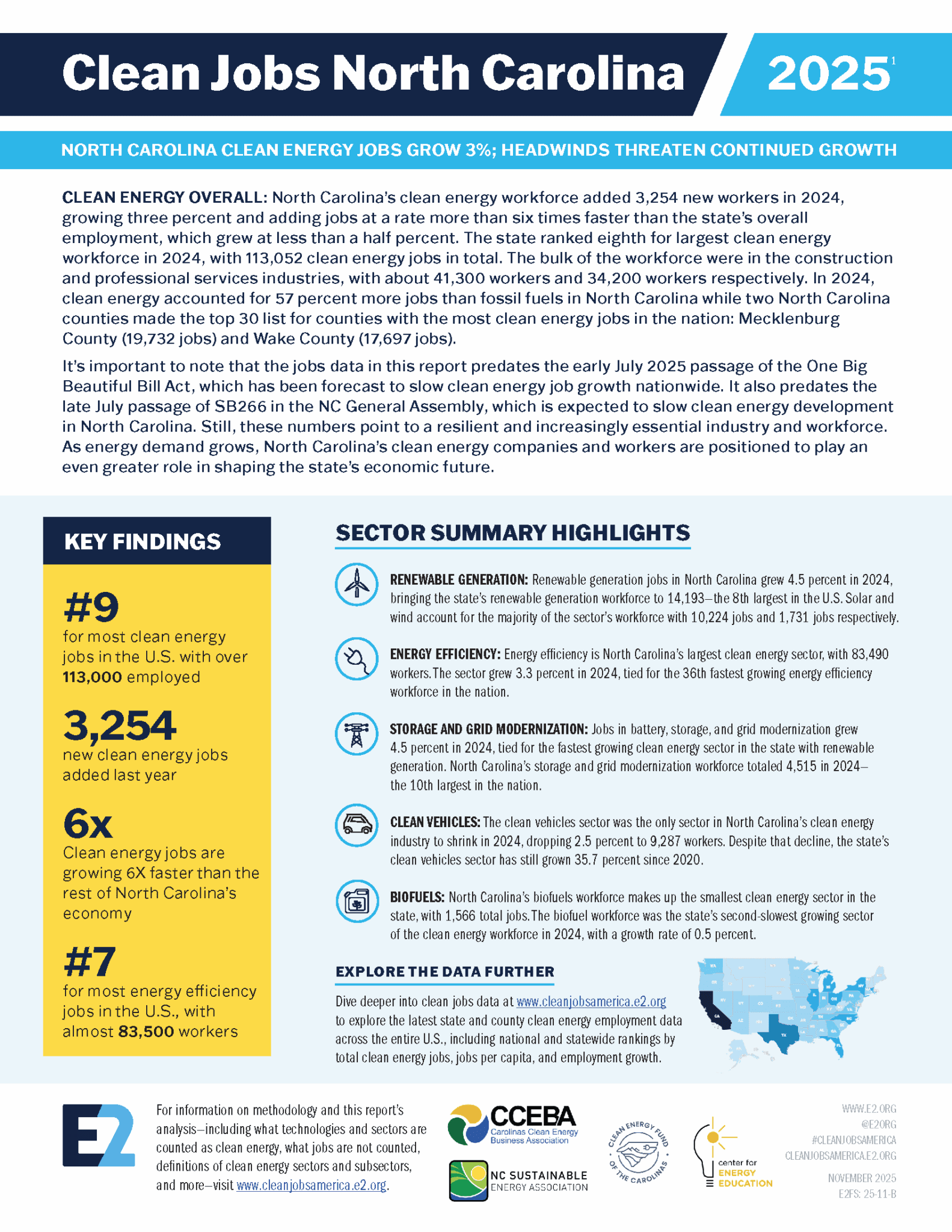
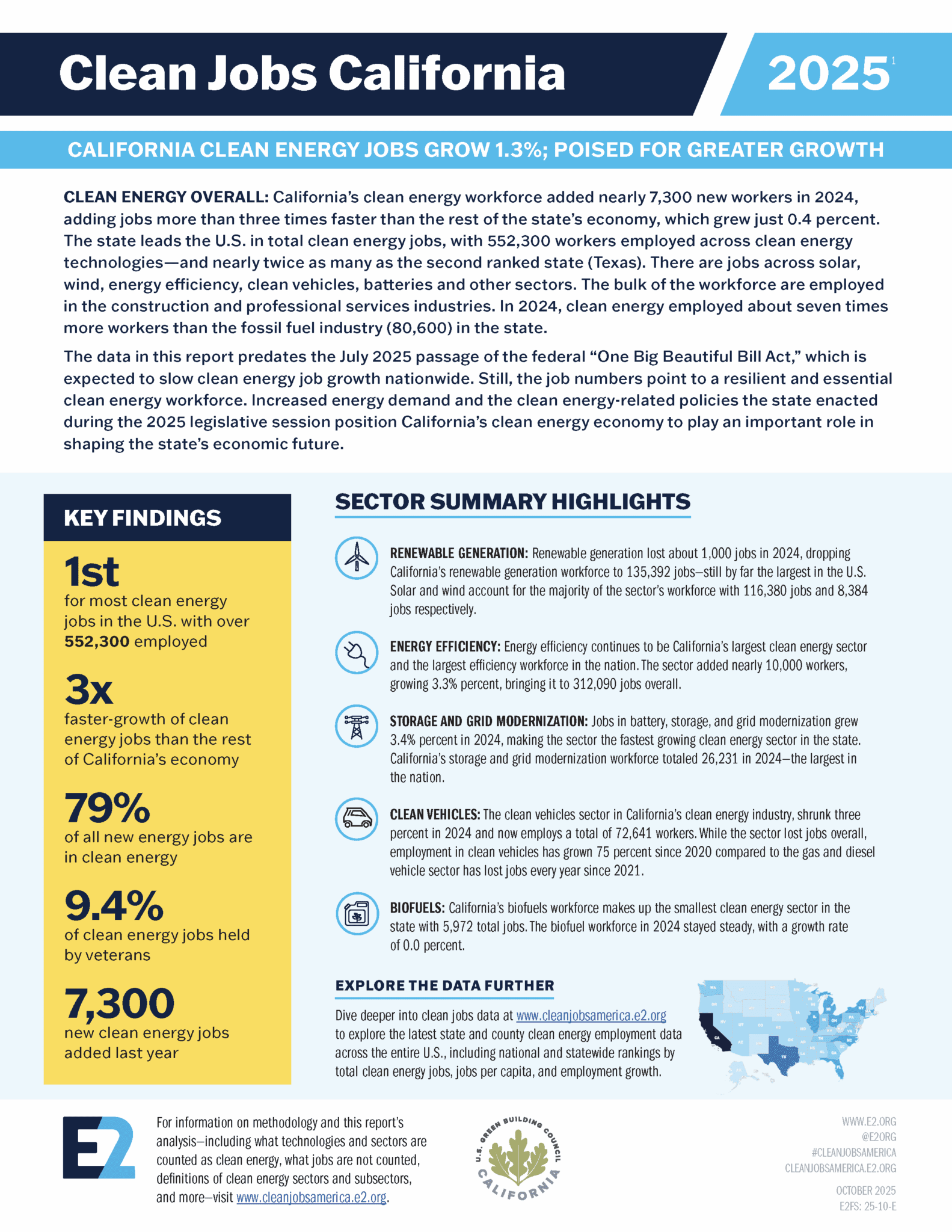
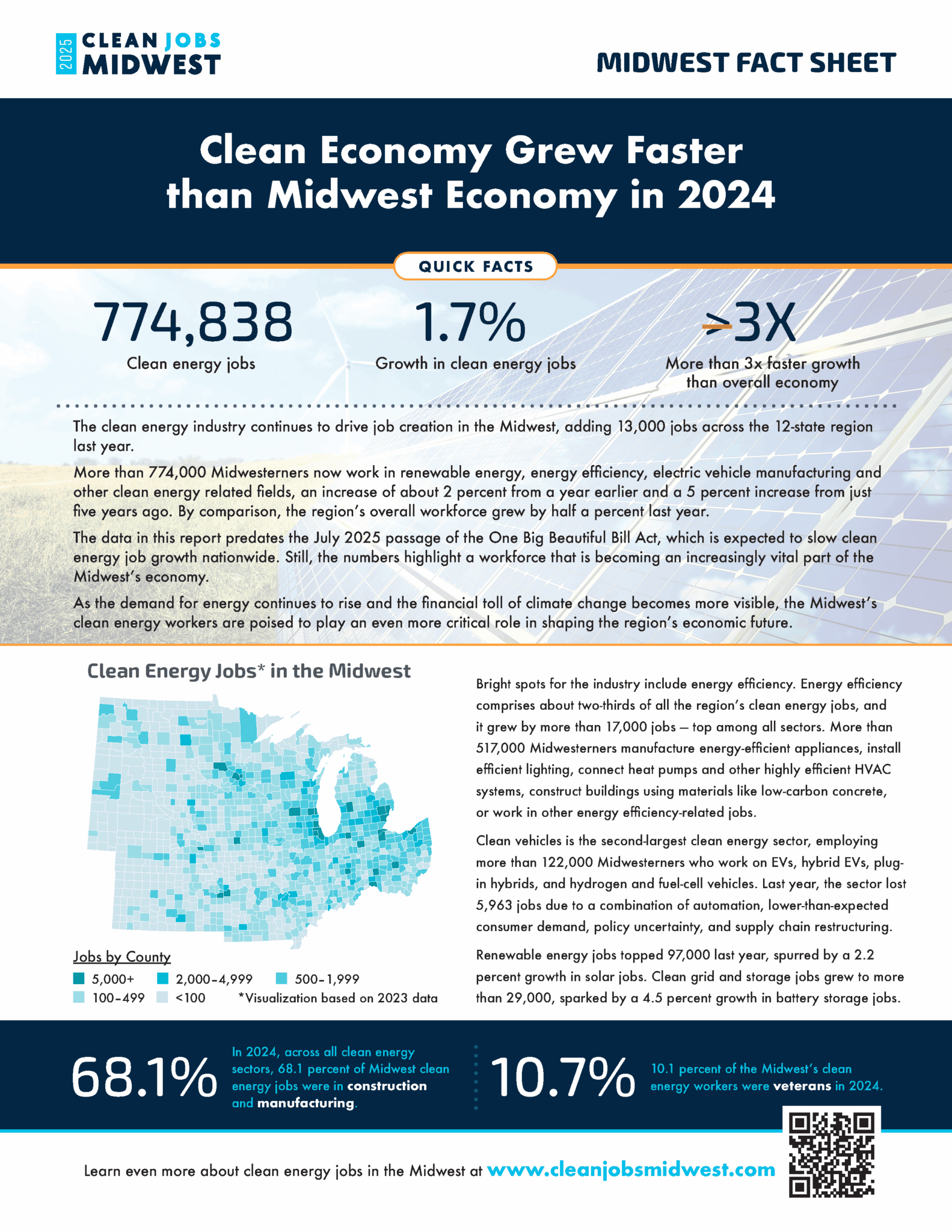
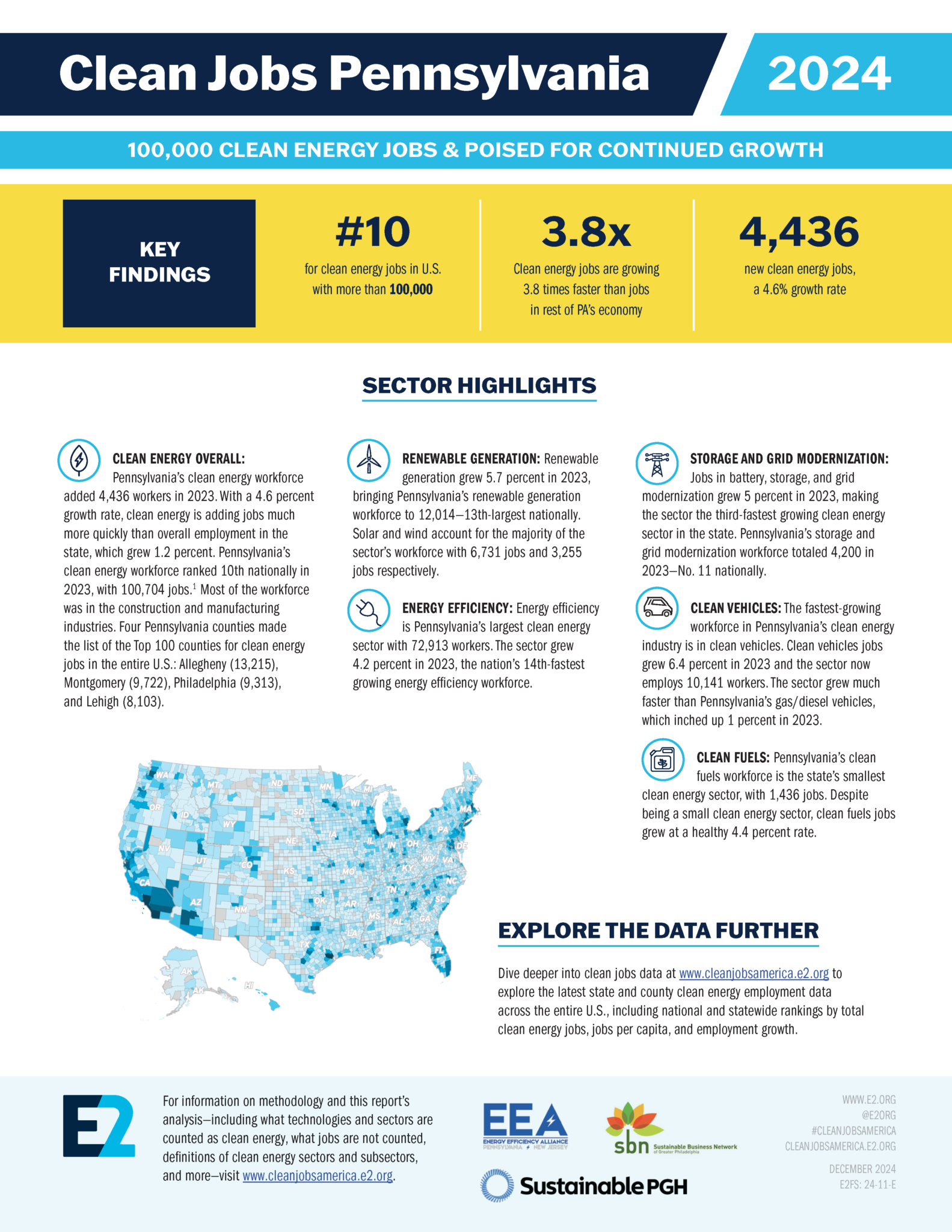
Georgia’s clean energy workforce added 3,292 new workers in 2024, growing 4 percent and adding jobs at a rate more than 5 times faster than the state’s overall employment, which grew at less than 0.8 percent. The state ranked 15th for largest clean energy workforce in 2024, with 85,535 clean energy jobs in total. The bulk of the workforce were in the construction and manufacturing industries, with about 43,800 and 13,200 workers respectively. In 2024, clean energy accounted for over seven times more jobs than fossil fuels in Georgia while three Georgia counties made the top 100 list for counties with the most clean energy jobs in the nation: Fulton County (15,976 jobs), Cobb County (7,778 jobs), and Gwinnett County (7,321 jobs).
It’s important to note that the jobs data in this report predates the July 2025 passage of the One Big Beautiful Bill Act, which has been forecast to slow clean energy job growth nationwide. Still, these numbers point to a resilient and increasingly essential industry and workforce. As energy demand grows, Georgia’s clean energy companies and workers are positioned to play an even greater role in shaping the state’s economic future.
Previous Reports
Clean Jobs Georgia 2025 is the 3rd clean energy jobs report for Georgia from E2. Previous reports can be accessed in the below links.
Background
This is the third Clean Jobs Georgia report produced by E2 based on analysis of the USEER, which was first released by the DOE in 2016. E2 was an original proponent of the DOE producing the USEER and was a partner on the reports produced by the Energy Futures Initiative (EFI) and National Association of State Energy Officials (NASEO) after the Trump administration decided to not produce it in 2017.
For additional insight on clean energy’s economic impact, visit e2.org/reports/ to access E2’s full slate of economic reports on the clean energy sector and related industries,