DEP wants to shut down sales of new gas-powered cars starting in 2035
Uchenna Bright, Northeastern state advocate at Environmental Entrepreneurs, disagreed. “We have nothing to gain by dragging our feet. The time to act is now,’’ she said.
Uchenna Bright, Northeastern state advocate at Environmental Entrepreneurs, disagreed. “We have nothing to gain by dragging our feet. The time to act is now,’’ she said.
“By adopting these standards, New Jersey will tap into a huge economic opportunity to mitigate the economic and human costs of the climate crisis and unchecked air pollution while also creating career pathways and high-quality jobs for the local New Jersey residents that are building our clean transportation future,” said Uchenna Bright, E2 Northeastern States […]
“Especially in New York City, buildings, particularly existing buildings, are one of our big challenges,” Uchenna Bright says. “Decarbonization and energy efficiency are still very much a huge market within the city, and there’s still a lot more work to be done there.”
Companies in business for nearly two centuries are as dependable as they are shrewd. They anticipate customers’ needs, innovate, and deliver. And they do this again and again and again.
That’s why John Deere’s Aug. 14 announcement that it’s building a plant to produce more batteries and chargers is noteworthy – it’s the latest sign that America’s economy is rapidly electrifying, from the farmer’s field on up.
Deere’s was one of 18 major clean economy announcements that companies made across the country last month, amounting to 9,529 new jobs and more than $6 billion in investments. All told, since the Inflation Reduction Act was announced just over a year ago, E2 has tracked 223 projects across more than three-dozen states amounting to about 75,000 jobs and $88 billion in investments.

A welder at John Deere’s plant in Kernersville, N.C. The iconic manufacturer announced in August it will expand its operations there to make batteries and chargers. (Photo courtesy of John Deere)
Deere’s new 115,000 square-foot plant will be in Kernersville, N.C., adjacent to another the company has operated since 1988. The facility is expected to help Deere, founded in 1837, produce more than 20 electric and hybrid electric models for the construction market by 2026, including excavators, forklifts and wheel loaders. It could also help roll out an autonomous, battery-powered electric utility tractor for the agricultural market, also by 2026.
“[W]e are prioritizing the development of a robust charging ecosystem and battery portfolio that can support and sustain the long-term adoption of electrification across a wide variety of applications,” said Pierre Guyot, SVP of John Deere Power Systems and Chairman of Kreisel, an Austrian battery company in which Deere acquired a majority stake last year.
The $69 million Deere project is expected to create about 50 jobs in North Carolina, with an average annual pay of more than $60,000. Occupations include assemblers, material handlers, packagers and quality inspectors.
The announcement was part of another big month for EV projects in the South. Georgia, Alabama and Tennessee each had at least one major EV project announcement. There were also billion-dollar solar manufacturing announcements in both Louisiana and New Mexico; grid announcements in Waukesha, Wisc., and Nacogdoches, Texas; and Singapore-based Bila Solar said it’s investing $35 million to repurpose an old Eli Lilly factory in Indianapolis, where Bila will also establish its new U.S. headquarters, creating some 240 new jobs.
Biden-Harris administration announces $30 million to build up domestic supply chain for critical minerals
The Energy Department announced up to $30 million to help lower the costs of the onshore production of rare earths and other critical minerals and materials from domestic coal-based resources, including coal, coal waste and associated by-products. Rare earths and other critical minerals are key to U.S. manufacturing of clean energy technologies – such as solar panels, wind turbines, electric vehicles, and hydrogen fuel cells. Extracting these materials creates good-paying jobs in communities that have historically produced fuels and electric power from fossil energy resources, supporting the Biden-Harris Administration’s commitment to revitalize energy communities. Read more.
Biden-Harris administration announces $100 million to transform climate pollution into sustainable products
The Energy Department is making $100 million available to support states, local governments and public utilities in purchasing products derived from converted carbon emissions. The goal is to speed up adoption of advanced carbon management technologies, creating a market for environmentally sustainable alternatives in fuels, chemicals and building products sourced from captured emissions from industrial and power generation facilities. Read more.
DOE announces $46 million to boost energy efficiency and slash emissions from buildings
DOE’s Buildings Energy Efficiency Frontiers and Innovation Technologies (BENEFIT) funding opportunity will provide $46 million to 29 projects across 15 states. The funding will support building technologies and retrofit practices that will create healthier households and communities and reduce energy waste. Read more.
Department of Energy announces up to $4.7 million for manufacturing cybersecurity innovation
The U.S. Department of Energy announced a new request for proposals (RFP) for up to $4.7 million to enhance cybersecurity within American manufacturing. This RFP, which will focus on energy efficient cybersecure manufacturing, is soliciting projects within three industrial use cases – industrial control systems, secure industrial digitization and industrial additive manufacturing. Read more.
IN AUGUST, E2 TRACKED 18 PROJECT ANNOUNCEMENTS ACROSS 12 STATES THAT ARE EXPECTED TO DRIVE MORE THAN $6 BILLION IN PRIVATE-SECTOR INVESTMENTS AND CREATE 9,529 JOBS.
ALABAMA (Auburn): Gov. Ivey announces auto parts maker Shinhwa plans $114 million Alabama expansion, creating 50 jobs in Auburn; August 15
CALIFORNIA (Garden Grove): EV company Harbinger Motors signs lease with Rexford in SoCal; August 28
CALIFORNIA (Imperial County): Stellantis invests in CTR to strengthen low emissions U.S. lithium production; August 17
GEORGIA (Bryan County): Gov. Kemp: Hyundai Motor Group and LG Energy Solution to invest additional $2 billion in Bryan County; August 31
GEORGIA (West Point): Gov. Kemp: Automotive supplier Daesol Ausys Georgia to Invest $72 million in Harris County; August 29
ILLINOIS (Niles): Gov. Pritzker & MicroLink Devices announce manufacturing expansion in Niles as part of REV Illinois; August 24
INDIANA (Indianapolis): Bila Solar launching plant, making Indianapolis its U.S. headquarters; August 29
LOUISIANA (New Iberia): First Solar to invest $1.1 billion to build solar panel manufacturing facility in Acadiana; August 10
NORTH CAROLINA (Kernersville): John Deere Electric Powertrain to invest $69 million for its North American HQ and new battery production operations in Kernersville; August 14
NEW MEXICO (Mesa Del Sol): Maxeon Solar Technologies selects Albuquerque as site for new 3-gigawatt solar cell and panel manufacturing facility; August 10
NEVADA (Las Vegas): Solar parts manufacturer plans to triple operations in Nevada; August 7
PUERTO RICO (Aguadilla): Great Lakes Solex plans to open solar panel facility in Aguadilla; August 15
TENNESSEE (Louden): International company bringing 600 new jobs to Loudon County; August 2
TEXAS (Kyle): XCharge NA’s new Texas facility boosts EV charging solutions; August 2
TEXAS (Nacogdoches): Gov. Abbott announces Eaton facility expansion in Nacogdoches; August 8
TEXAS (Pleasure Island): A new wind farm in Port Arthur will be bringing jobs to the area; August 29
WISCONSIN (Kenosha): Siemens to begin manufacturing solar inverters in U.S.; August 15
WISCONSIN (Waukesha): Increase in demand drives Eaton expansion; August 15
This analysis is based on publicly available information for new clean energy projects, expansions, and renewed productions only announced since the Inflation Reduction Act (IRA) passed on August 16, 2022. Projects that began development, were proposed, or applied for local and state approval before the passage of the IRA are not included. For more information on other projects that stand to benefit to benefit from clean energy investments in different ways, see other resources below from the White House, Climate Power, the Climate Action Campaign, American Clean Power, and Energy Innovation.
Investing in America | Invest.gov | Interactive map that illustrates the impact of these record-breaking levels of public and private investment across states and territories under the Biden Administration.
Clean Energy Projects Tracker | ClimatePower.us | Climate Power’s analysis includes public announcements of clean energy developments that have been proposed, launched or advanced since the passage of the Inflation Reduction Act (IRA).
Climate Wins Here Map | ActOnClimate.com | Interactive map off federal investments made in nationwide through the IRA and Infrastructure Investment and Jobs Act.
Clean Energy Investing in America | CleanPower.org | Analysis of utility-scale clean energy investments announced since August 16, 2022.
Federal Clean Energy Tax Credit Benefits By State | EnergyInnovation.org | Analysis of potential state-level benefits from the IRA on economic growth, jobs, and public health in the 48 contiguous states, focusing on clean electricity and clean vehicle tax credits.
Last week, the state legislature overrode Gov. Roy Cooper’s veto of a bill that puts a freeze on some residential building code updates, impacting energy efficiency and structural safety standards of new homes for years to come. “Based on the expert analysis that we’ve seen, the $20,000 estimate was pretty overinflated, and undersold the benefits […]
Building codes are a vital tool for states to improve energy efficiency and reduce carbon emissions. But in a drastic move, North Carolina state lawmakers have just made it illegal for the state to overhaul its residential building codes until 2031. “Based on independent analysis, adopting these standards is just a win across the board,” Zach Amittay, Southeast advocate […]
North Carolina misses chance for cleaner, more affordable, more resilient residential buildings RALEIGH, NC — The North Carolina General Assembly overrode Governor Cooper’s veto of HB 488 last night, blocking progress toward cleaner, more affordable, more resilient residential buildings in the state for nearly the next decade. The bill effectively freezes the state’s residential building […]
Zach Amittay, Southeast Advocate with E2, a nonpartisan group of business leaders and investors: “This decision from the General Assembly means eight years of stagnation for North Carolina’s progress toward healthier, more affordable housing. Residents of new builds deserve to reap the benefits of more efficient and resilient homes with better air quality and lower […]
One year after the Inflation Reduction Act (IRA) was signed into law on August 16, 2022, private industry has announced at least 210 major new clean energy and clean vehicle projects across the country, according to E2’s findings. Based on publicly available information from 178 of the 210 announcements that included new jobs and/or investment estimates, if completed the projects would create at minimum 74,181 new jobs and bring in $86.3 billion in private investments.
These announcements are expected to drive a major boost in new clean energy jobs in the coming years, compared to clean energy employment growth before the IRA. Not including 2020 job losses fueled by COVID-19 shutdowns and ensuing economic crisis, clean energy has averaged an annual increase of 117,000 jobs since 2018. The jobs and investments estimated in the more than 200 announcements would represent a sizable increase in annual employment growth in clean energy and is indicative of a coming wave of job gains on the horizon unequaled in the history of the clean energy sector — presuming normal employment gains based on overall market growth, projects announced and in development before the IRA was signed, and smaller investments and new projects that are unable to be tracked by this analysis. In addition, only 142 of the announcements included a temporary and/or permanent job creation estimate — leaving one-third of new announcements without any employment estimates as of the time of this analysis.

| States | Projects | Est. Jobs | Est. Investment |
| 38 | 210 | 74,181 | $86,320,800,000 |
* 54 of the 208 announcements did not include investment estimates and 68 did not include job estimates.
The data used in this report is limited to information made publicly available by the companies announcing projects and may not be comprehensive of all major projects that began development after August 16, 2022, nor be exclusive of projects that did not publicly disclose specific plans prior to the passage of the IRA. Projects that began development, were proposed, or applied for local and state approval before the passage of the Inflation Reduction Act (IRA) are not included. This analysis also does not include federal investments in which the federal government has provided financial resources for the complete project, lease sales, projects in which an announcement was made but lacked specific geographic information, etc. Details on projects came from news reports on new and related projects, press releases from companies announcing new developments, and government announcements. 156 of the 210 announcements include investment data and 142 of the 210 announcements include job estimates, making this information very conservative. Some announcements did not include specific locations that could be used to identify congressional district information.
For the latest full list of clean energy job announcements tracked by E2, visit https://e2.org/announcements.
E2 is a national, nonpartisan group of business leaders, investors, and professionals from every sector of the economy who advocate for smart policies that are good for the economy and good for the environment. E2 members have founded or funded more than 2,500 companies, created more than 600,000 jobs, and manage more than $100 billion in venture and private equity capital.
For additional insight into E2’s other reports, visit e2.org/reports.
This summer, more Americans are hitting the open road in an electric vehicle (EV) than ever before. For evidence of the EV market’s expansion, look to two places.
The first is the lane next to you. About 1 million new EVs are expected to be sold in the U.S. this year, a record. In the second quarter alone, Americans bought 300,000 new EVs, led by Tesla, Chevrolet and Ford. That’s nearly 50 percent more than the second quarter a year ago. According to the U.S. Department of Energy, Americans drove 19 billion miles in light-duty plug-in EVs in 2021, 57 percent higher than the previous year. In 2023, those miles are certain to increase by billions more.
Another good place to look for EV market growth is the list of more than 200 projects E2 has tracked since the Inflation Reduction Act (IRA) was signed into law last summer. Of those announcements, more than 90 are related to EVs, amounting to some 43,000 new jobs and more than $51.5 billion in investments across 18 states. Twelve announcements came from the UAW stronghold of Michigan alone – more than any other state, suggesting many jobs we’ve tracked provide good union wages that can sustain growing families.
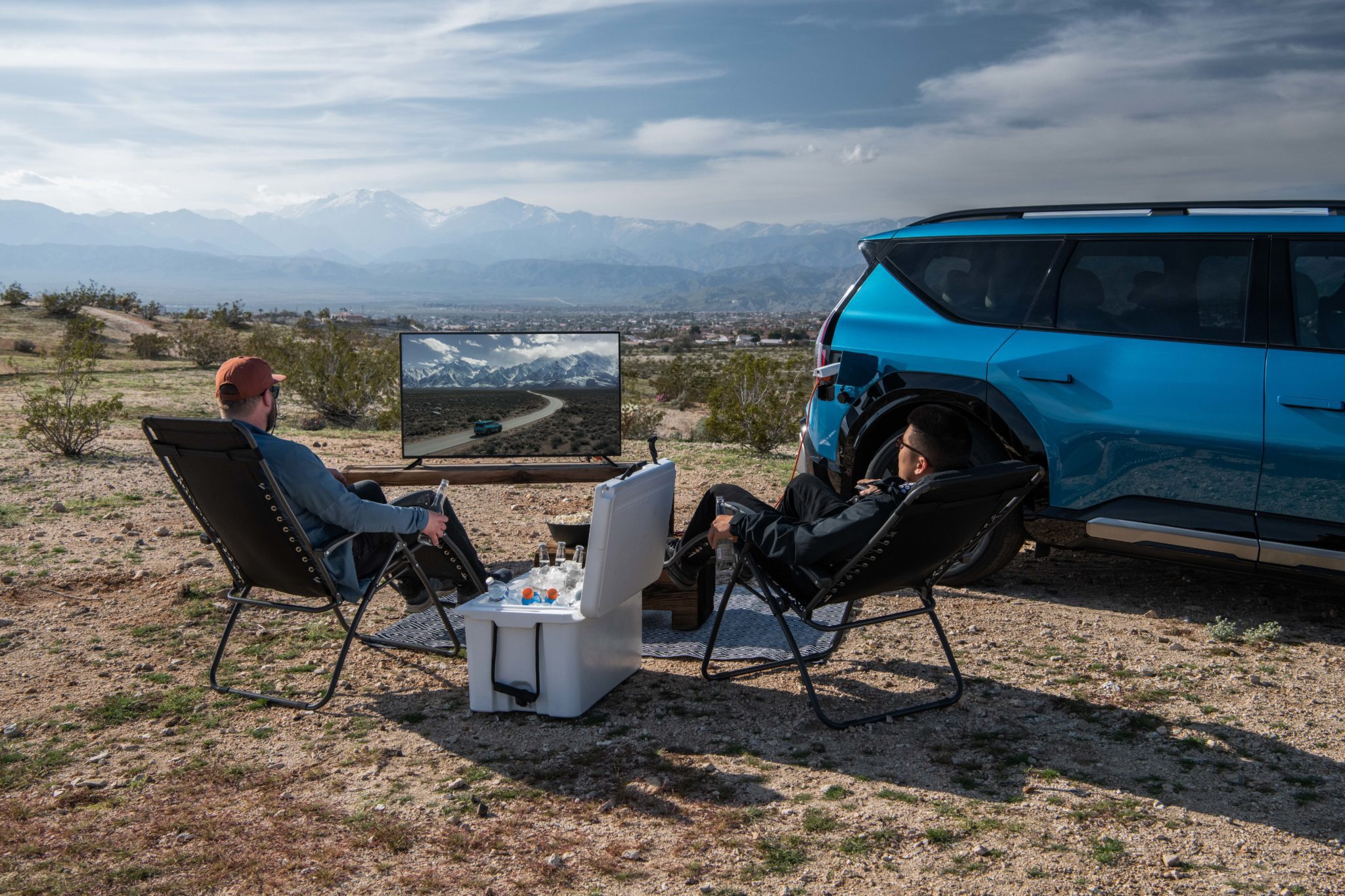
Last month, six of the 10 projects E2 tracked were related to EV manufacturing. For example, Kia said it will soon start production of its three-row, plug-in electric SUV in Georgia, creating nearly 200 jobs and generating about $200 million in private investments. In Tennessee, meanwhile, a major hub for Ford suppliers – the so-called “BlueOval City,” after the carmaker’s iconic nameplate – will add another 1,050 American jobs. The governors of Georgia and Tennessee, both Republicans, lauded the clean economy projects in their respective states, calling them “generational” job creators that will provide “new opportunities for families to thrive.”
With all these new EVs hitting the road, where will they charge? Currently, there are 62,700 public EV charging stations across the U.S. The Bipartisan Infrastructure Law includes $7.5 billion to help expand that network, especially along the interstates and other major highways where most long-distance trips occur. Earlier this year, the White House said it wants 500,000 charging stations nationwide by 2030 – about eight times what’s currently available.

Director, Strategic Partnerships
Schneider Electric
Mt. Pleasant, South Carolina
You work on microgrids at Schneider Electric. What are some trends you’re seeing?
I’ve been with Schneider about 15 years. One industry challenge is that a lot of the technology that a homeowner or a commercial industrial business uses to install renewables or microgrids has been heavily customized and engineered. That’s starting to change. Now, you’re seeing a lot of standardization, a lot of products and solutions coming in a more packaged format. This evolution is making microgrids, and the renewables that power them, more accessible to all of us. It does this by driving down manufacturing, installation and service costs allowing consumers and utilities see meaningful financial returns while lowering their carbon footprint.
A big focus of this newsletter is how federal clean energy policies and investments are benefiting the economy. How is Schneider benefiting from the Inflation Reduction Act?
This pre-dates the IRA, but we worked closely with Duke Energy to set up a microgrid for Montgomery County, Md. The county had been hit by major storms in recent years that kept knocking out power, and it wanted to enhance resiliency for critical infrastructure like a correctional facility and the county’s public safety headquarters. We came up with a concept that relied on technologies like solar and CHP, developed the project, validated the system and brought together the various renewable energy generation technologies so they could work in sync. We already see the IRA bringing more projects like this to fruition.
You live further south, down in South Carolina. What kinds of impacts have federal clean energy policies had on your state?
I live in Mt. Pleasant, S.C., which is just outside Charleston. Clean energy projects are popping up all over the place, including EV charging stations. It really feels like South Carolina has a great opportunity to lead one of the biggest economic transitions our country has ever seen.
Specifically, what kinds of projects have you been reading about?
There have been plenty. I know E2 tracked a big EV announcement this month outside of Columbia, but that’s just the latest one in my state. BMW is also investing $1.7 billion to expand its Spartanburg factory to build electric cars. Albemarle Corp. is building a new $1.3 billion lithium processing plant in Chester County. Volkswagen is planning a new electric vehicle factory in Blythewood employing about 2,000 workers. Cirba Solutions is constructing a new $300 million battery materials company in Orangeburg that will create another 300 jobs.
What has struck you about these projects?
I’m not particularly interested in politics, but witnessing the transformative impact of recent federal climate and clean energy legislation on my industry and our state, I have to say I have come to appreciate the power of good policy. These are lighthouse projects that will demonstrate what’s possible and draw more businesses, and people, into the growing clean energy economy.
Do you feel this progress could be at risk?
In the spring, it was disheartening to watch House Republicans vote to undermine clean energy investments as part of Speaker McCarthy’s federal debt ceiling bill, plus a separate solar panel policy provision that led to layoffs in solar and could result in retroactive fines for completed projects. These were shortsighted partisan games. In South Carolina, it was pretty clear our federal lawmakers were sending the wrong market signals to American companies and workers. The last thing we need is another lawmaker in South Carolina to turn their back on the jobs, cost savings and economic resiliency that clean energy delivers to our state. We have a massive economic opportunity, and we can’t let it slip away. Lawmakers need to put aside partisan politics and prioritize their constituents. In South Carolina, that means prioritizing our economy and our environment by standing behind policies like the IRA and the Bipartisan Infrastructure Law.
Alabama (5)
Arizona (8)
Arkansas (2)
California (8)
Colorado (7)
Connecticut (3)
Florida (2)
Georgia (20)
Illinois (3)
Indiana (6)
Iowa (2)
Kansas (1)
Kentucky (5)
Louisiana (3)
Maine (1)
Maryland (1)
Massachusetts (5)
Michigan (18)
Minnesota (3)
Mississippi (2)
Missouri (1)
Nevada (5)
New Hampshire (1)
New Jersey (1)
New Mexico (2)
New York (11)
North Carolina (9)
Ohio (13)
Oklahoma (4)
Oregon (1)
Pennsylvania (2)
South Carolina (18)
Tennessee (12)
Texas (12)
Vermont (1)
Virginia (3)
West Virginia (2)
Wisconsin (4)
Biden-Harris administration launches historic $20 billion in grant competitions to create national clean financing network
The U.S. Environmental Protection Agency (EPA) launched two Notices of Funding Opportunity for $20 billion across two grant competitions under the $27 billion Greenhouse Gas Reduction Fund, an Inflation Reduction Act program central to President Biden’s Investing in America Agenda and environmental justice goals. Together, these competitive grant opportunities will mobilize private capital into clean technology projects to create good-paying jobs and lower energy costs for American families, especially in low-income and disadvantaged communities, while cutting harmful pollution to protect people’s health and tackle the climate crisis. Read more.
Biden-Harris administration to jumpstart clean hydrogen economy with new initiative to provide market certainty, unlock private investment
The U.S. Dept. of Energy (DOE) released a Notice of Intent, which includes a Request for Information, to invest up to $1 billion in a demand-side initiative to support the Regional Clean Hydrogen Hubs, or H2Hubs. Funded by the Bipartisan Infrastructure Law, the H2Hubs program will help form the foundation of a national clean hydrogen network vital to reducing emissions from some of the most energy-intensive sectors of our economy, including industrial and chemical processes and heavy-duty transportation. Read more.
USDA announces new investments to improve measurement, monitoring, reporting and verification of greenhouse gas emissions
Agriculture Secretary Tom Vilsack announced the U.S. Dept. of Agriculture will invest $300 million to improve measurement, monitoring, reporting and verification of greenhouse gas emissions and carbon sequestration in climate-smart agriculture and forestry. Read more.
DOE announces $150 million for states to train residential energy efficiency contractors
The DOE announced funding for states to begin training a new generation of residential energy contractors. The State-Based Home Energy Efficiency Contractor Training Grants Program will provide $150 million in grants for states to reduce the cost of training, testing and certifying residential energy efficiency and electrification contractors. This funding will attract and educate new workers in the industry, train and empower existing workers, and support business owners to make homes healthier and more energy efficient. Read more.
In July, E2 tracked 16 project announcements across ten states that are expected to drive at least $2.2 billion in private-sector investments and create at a minimum nearly 3,600 jobs.
CALIFORNIA (Ontario): Cenntro announces new assembly plant in California; July 11
COLORADO (Brighton): Vestas Announces $40 Million Investment to Manufacture the Industry-Leading Turbine in Colorado Factories; July 18
COLORADO (Windsor): Vestas Announces $40 Million Investment to Manufacture the Industry-Leading Turbine in Colorado Factories s; July 18
COLORADO (Windsor): Microvast announces energy division expansion in Colorado; July 11
COLORADO (Colorado Springs): Swiss company plans solar cell manufacturing facility in Colorado Springs with more than 350 jobs; July 28
GEORGIA (West Point): Kia to invest more than $200 million in EV9 production expansion; July 12
KENTUCKY (Berea): Auto manufacturer announces $153 million expansion in Berea; July 11
MICHIGAN (Livonia): Bollinger Motors gets $3M grant to expand Michigan facilities, add jobs; July 25
MICHIGAN (Oak Park): Bollinger Motors gets $3M grant to expand Michigan facilities, add jobs; July 25
MINNESOTA (Minneapolis-St. Paul): Canada’s Heliene plans new U.S. solar panel and cell factory; July 24
OHIO (Perrysburg): First Solar secures $1 billion revolving credit facility; July 6
SOUTH CAROLINA (West Columbia): $20 million, 600 new jobs: President Biden talks economy, jobs at Flex LTD in West Columbia; July 5
TENNESSEE (Lawrenceburg): Gov. Lee, Commissioner McWhorter announce Magna to be first supplier at Ford’s BlueOval City supplier park; July 20
TENNESSEE (Stanton): Gov. Lee, Commissioner McWhorter announce Magna to be first supplier at Ford’s BlueOval City supplier park; July 20
TENNESSEE (Stanton): Gov. Lee, Commissioner McWhorter announce Magna to be first supplier at Ford’s BlueOval City supplier park; July 20
Texas (Fort Worth): Electric vehicle component supplier plans to add 120 jobs, invest $21M in Fort Worth plant; July 25
This analysis is based on publicly available information for new clean energy projects, expansions, and renewed productions only announced since the Inflation Reduction Act (IRA) passed on August 16, 2022. Projects that began development, were proposed, or applied for local and state approval before the passage of the IRA are not included. For more information on other projects that stand to benefit to benefit from clean energy investments in different ways, see other resources below from the White House, Climate Power, the Climate Action Campaign, American Clean Power, and Energy Innovation.
Investing in America | Invest.gov | Interactive map that illustrates the impact of these record-breaking levels of public and private investment across states and territories under the Biden Administration.
Clean Energy Projects Tracker | ClimatePower.us | Climate Power’s analysis includes public announcements of clean energy developments that have been proposed, launched or advanced since the passage of the Inflation Reduction Act (IRA).
Climate Wins Here Map | ActOnClimate.com | Interactive map off federal investments made in nationwide through the IRA and Infrastructure Investment and Jobs Act.
Clean Energy Investing in America | CleanPower.org | Analysis of utility-scale clean energy investments announced since August 16, 2022.
Federal Clean Energy Tax Credit Benefits By State | EnergyInnovation.org | Analysis of potential state-level benefits from the IRA on economic growth, jobs, and public health in the 48 contiguous states, focusing on clean electricity and clean vehicle tax credits.
Innovation is at the heart of America’s farm tradition. Having proven over more than two centuries that they can thrive while dealing with uncertainty and unforeseen challenges, adapt to new circumstances often out of their control, and innovate practical solutions to ongoing change, America’s farmers are proven entrepreneurs. Whether it’s rising input costs, fluctuating commodity prices and tariffs, or market disruptions based on events thousands of miles away, farmers are skilled at seizing the opportunities in adversity.
Now the agriculture industry increasingly faces unprecedented challenges from severe and unseasonable weather, putting practices that were effective in past decades in question. Out of necessity, farmers and ranchers are experimenting with and adopting forward-thinking methods to ensure that their operations, both large and small, survive and thrive in the face of these swiftly evolving circumstances.
More than ever, American farmers need the support and freedom to innovate. But U.S. federal farm policies do not sufficiently incentivize, and in many cases hinder, this farmer-led entrepreneurial activity. The 2023 Farm Bill represents a timely and strategic opportunity to greatly increase investment and innovation in new practices and technologies that:
These economic and environmental benefits can be achieved through three policies in the 2023 Farm Bill that will incentivize and promote the freedom to innovate that so many farmers are demanding to manage their operations for maximum health and productivity.
The next decade represents a critical window to enact policies that address the climate challenge. It’s imperative that the next Farm Bill helps transform U.S. agriculture to meet 21st century challenges with a framework that robustly incentivizes innovation—and actively partners with the producers, Ag tech, equipment and input companies, consumer product companies and consumers, and other stakeholders who are leading the Ag sector to a new, innovative, and economically sustainable future.

The 2018 Farm Bill introduced a new program, On-Farm Conservation Innovation Trials, under the USDA’s Natural Resources Conservation Service (NRCS). The program included the Soil Health Demonstration Trial (SHDT) program with a specific focus on practices and innovations to improve soil health. Hundreds of farmers and ranchers in nearly all 50 states are now participating in SHDT trials, and many more would like to. As called for in the Healthy Soils Healthy Climate Act introduced in Congress6, the 2023 Farm Bill should greatly expand the SHDT program and make it permanent.
With the emergence of Ag Tech as a potentially transformational and fast-growing investment sector in recent years—akin to the clean-energy sector in 2009—Congress should create and fund an entity comparable to ARPA-E within USDA to support and accelerate private and academic R&D in future-focused Ag areas such as soil health data collection and measurement; farm robotics; precision Ag management software; and bio-based fertilizers, herbicides, and pesticides. The new entity should create partnerships with other relevant agencies such as EPA, DOE, DOD and National Labs, as well as land grant universities across the U.S. These federally funded research hubs will bring high-quality jobs, both directly and indirectly through p
Crop insurance has been a cornerstone of U.S. federal agriculture policy and an essential economic safety net for America’s farmers for nearly a century. Under policies administered by the USDA’s Risk Management Agency (RMA), some 90% of all farmed acres in the U.S. are covered by federal crop insurance. However, some crop insurance policies have become a barrier to best practices and have reduced producers’ ability to innovate for crop resilience in their specific regions and on their individual farms. And the current system costs U.S. taxpayers billions of dollars every year.
E2 is a national, nonpartisan group of business leaders, investors, and professionals from every sector of the economy who advocate for smart policies that are good for the economy and good for the environment. E2 members have founded or funded more than 2,500 companies, created more than 600,000 jobs, and manage more than $100 billion in venture and private equity capital.
For additional insight into E2’s other reports, visit e2.org/reports.
In press releases and news stories touting the 10 major clean economy announcements tracked by E2 in June alone– amounting to nearly $1 billion in new investment and 3,140 jobs – business leaders and elected officials didn’t hold back their excitement about what they’re seeing happening on the ground across America’s booming clean economy:
Federal clean energy policies like the IRA and the Bipartisan Infrastructure Law are now clearly having a tangible impact in towns and cities across the country – big, small and sometimes off the beaten path.

In addition to the projects above, the latest batch of announcements E2 tracked came from places like Canyonville, Ore., where a 4-megawatt solar array spread across 18 acres of field will be designed to support agriculture underneath; Crawfordville, Ind., where a state-of-the art steel plant will manufacture utility structures to help support electrification initiatives nationwide, and Mesquite, Texas, where yet another $250 million facility will manufacture solar modules, this one creating 1,500 jobs.
All told, since the IRA passed last August, 189 projects have been announced across 37 states totaling more than $84 billion in investments and more than 66,000 jobs.
Given these numbers, it’s easy to understand why businesses and politicians – Republicans and Democrats alike – are growing increasingly excited about America’s clean economy.

Founder
Climate64
New York, New York
Where do you currently live?
I live in Brooklyn. There’s a good tech scene here and as a full-stack software engineer it was a logical place to be within New York City. But a lot of my friends call me a traitor, because I grew up in the Bronx.
What kind of access do you have to residential clean energy?
We live in Crown Heights. Back around 2017, we were an early client of BlocPower, which is now backed by VC firms and the likes of Goldman Sachs. BlocPower employs a lot more people now than the eight or so who worked there during our energy efficiency upgrades. We also have solar on our eight-apartment co-op. The array was installed by Brooklyn SolarWorks and Solar One, a nonprofit that connects New Yorkers to renewable energy incentive programs while helping train workers.
How has living in a green home impacted your own career?
I had previously worked in the nonprofit sector and thought I could help people join the green economy, particularly low-income people in the city, doing the kind of work I saw being done on my home. So I became business development manager for sustainability and clean energy at The HOPE Program, which helps people overcome barriers like racism and the digital divide to find good careers in the green economy. I built the business cultivation arm of their first HVAC training program and partnered with businesses and organizations from around the city.
Did that lead to other opportunities?
Absolutely. I was invited to join a green jobs working group within a larger network of organizations in New York. Our group developed a green jobs board, and given my software engineering background, I was asked to develop the software. I was like, ‘Okay, that sounds right up my alley.’
Is that what inspired you to start your current company, Climate64?
Yes. What I realized is that before people even get into the green economy, they have to have certifications. All these companies need talent and trained workers, but they are scarce. Before you can even set foot on a construction site, you need to have certain entry-level certifications, like OSHA 30, OSHA 40 and EPA 608 for handling refrigerants. We are basically an AI-driven certification matching system for workers and employers in a niche market, which is climate tech.
What advice would you give to a hiring manager at a clean economy company that wants to reach underserved communities to diversify their workforce?
I’ve been in workforce development for a while, focusing particularly on sustainability, and one of the things companies should be doing is partnering with community-driven sustainability programs. They need to get the word out with local communities and initiatives. They need to build some trust.
Anything else employers can do?
Unfortunately, one problem I run into with employers is they’re reluctant to hire people from these communities, because some people can have rough edges – maybe they have a record, maybe a misdemeanor. So they’ve kind of been shunned because of their background. But the truth is, people from these areas are some of the hardest-working people and all they need is opportunity. Some of my best experiences have been with employers who are a little bit more open to giving people a second chance.
On the other side of the equation, what advice would you give young people who want to break into the clean economy?
The green economy gives you an avenue to have a great job and take care of your family. More and more, it’s important for people to participate in the very projects happening in their neighborhoods. I’ll take an example from where I grew up in the Bronx. In a part of the borough called Hunt’s Point Market, it’s basically an industrial zone with fabrication plants, big truck depots and storage facilities where so much of the food and produce that feeds New York City passes through. That whole facility and all those trucks will be going electric. There are job opportunities in that transition.
Environmental Protection Agency (EPA) launches $7 billion ‘Solar for All’ grant competition to fund residential solar programs
The EPA launched a $7 billion grant competition to increase access to solar energy for millions of low-income households. The Solar for All competition will help create and expand low-income solar programs that provide financing and technical assistance, such as workforce development, to enable low-income and disadvantaged communities deploy and benefit from residential solar. Read more.
First-ever national clean hydrogen strategy and roadmap is released
The Biden-Harris Administration released the “U.S. National Clean Hydrogen Strategy and Roadmap,” a comprehensive framework for accelerating production, processing, delivery, storage and use of clean hydrogen. Read more.
Commerce announces $575 million for coastal and Great Lakes climate resilience
The Commerce Department announced its first-ever Climate Resilience Regional Challenge, which will provide $575 million to help coastal and Great Lakes communities become more resilient to extreme weather and other climate impacts. The Challenge is the first and largest funding opportunity released under the $2.6 billion Inflation Reduction Act climate resilience framework unveiled by the Commerce Department earlier this month. Read more.
EPA announces over $278 million in funding to improve water infrastructure for tribes and Alaska Native villages
The EPA announced more than $278 million in funding to improve access to safe and reliable drinking water and wastewater services for American Indian tribes and Alaska Native villages, helping to improve compliance with existing water regulations, identify and replace lead service lines, and address harmful emerging contaminants in drinking water and wastewater, such as per- and polyfluorinated substances, or PFAS. Read more.
New funding to advance battery recycling technology is announced
The Energy Department announced more than $192 million in new funding for recycling batteries from consumer products, launching an advanced battery R&D consortium and the continuation of the Lithium-Ion Battery Recycling Prize. Read more.
America’s industrial sector to receive $135 million to reduce emissions
Department of Energy (DOE) is investing $135 million in 40 projects to reduce carbon pollution from the industrial sector. The selected projects will support research, development and pilot-scale demonstrations in industries including cement and concrete, chemicals, food and beverage, iron and steel and petroleum refining. Read more.
Department of Energy announces $80 million to strengthen American manufacturing
DOE announced up to $80 million in grant funding help small- and medium-sized manufacturers improve energy efficiency, cut costs, increase productivity and reduce industrial emissions. Applications due July 14. Read more.
National Oceanic and Atmospheric Administration (NOAA) invests $60 million to create a Climate-Ready Workforce
NOAA opened a competitive funding opportunity for the Climate-Ready Workforce for Coastal States, Tribes and Territories Initiative to connect people to good-paying jobs, such as landscape technicians, heat health outreach specialists and climate equity officers. NOAA will invest $60 million from the Inflation Reduction Act. Read more.
Energy Department intends to fund up to $36 million for industrial thin-film photovoltaic RD&D
The Solar Energy Technologies Office issued a notice of intent to release a funding opportunity announcement of up to $36 million for research, development and demonstration projects on two major thin-film PV technologies: metal halide perovskites and cadmium telluride. Read more.
DOE announces $4 million to reduce wood heater pollutants and accelerate innovative technology
Nearly 11 million U.S. homes use cordwood or wood pellets for space heating, producing 7 percent of the nation’s harmful particulate emissions. Now, Brookhaven National Laboratory and Lawrence Berkeley National Laboratory are teaming up to improve air quality through wood heater innovation, with $4 million in funding provided by EERE’s Bioenergy Technologies Office. Concept papers due August 11. Read more.
DOE launches new round of American-made solar prize
The Energy Department launched the American-Made Solar Prize Round 7 – a $4 million prize program to spur innovations in solar hardware and software technologies. The round offers additional cash prizes and business development support for new and diverse teams. Read more.
In JUNE, E2 tracked 10 project announcements across nine states that are expected to drive at least $1 billion in private-sector investments and create at a minimum 3,100 jobs.
| DATE | COMPANY/ORG | STATE | ANNOUNCEMENT | SECTOR | DETAILS |
| 6/1 | Manner Polymers | IL | Link | EV Solar Mfg |
60 Jobs $54M |
| 6/7 | Woory Industrial Co | GA | Link | EV | 130 jobs $18M |
| 6/8 | Toyota | MI | Link | EV Battery/Storage |
$50M |
| 6/14 | Nucor | IN | Link | Charging/Grid | 200 Jobs $115M |
| 6/15 | Canadian Solar | TX | Link | Solar Mfg. | 1,500 Jobs $250M |
| 6/18 | SolRiver Captial | OR | Link | Solar Gen. | 4MW |
| 6/20 | Holcim US | MI | Link | Solar Gen. | 25MW |
| 6/22 | VSK Energy | CO | Link | Solar Mfg. | 900 Jobs $250M |
| 6/23 | NVH Korea | GA | Link | EV | 160 Jobs $72M |
| 6/26 | Enchem America Inc. | TN | Link | EV Battery/Storage |
190 Jobs $152.5M |
This analysis is based on publicly available information for new clean energy projects, expansions, and renewed productions only announced since the Inflation Reduction Act (IRA) passed on August 16, 2022. Projects that began development, were proposed, or applied for local and state approval before the passage of the IRA are not included. For more information on other projects that stand to benefit to benefit from clean energy investments in different ways, see other resources below from the White House, Climate Power, the Climate Action Campaign, American Clean Power, and Energy Innovation.
Investing in America | Invest.gov | Interactive map that illustrates the impact of these record-breaking levels of public and private investment across states and territories under the Biden Administration.
Clean Energy Projects Tracker | ClimatePower.us | Climate Power’s analysis includes public announcements of clean energy developments that have been proposed, launched or advanced since the passage of the Inflation Reduction Act (IRA).
Climate Wins Here Map | ActOnClimate.com | Interactive map off federal investments made in nationwide through the IRA and Infrastructure Investment and Jobs Act.
Clean Energy Investing in America | CleanPower.org | Analysis of utility-scale clean energy investments announced since August 16, 2022.
Federal Clean Energy Tax Credit Benefits By State | EnergyInnovation.org | Analysis of potential state-level benefits from the IRA on economic growth, jobs, and public health in the 48 contiguous states, focusing on clean electricity and clean vehicle tax credits.