Oregon among U.S. leaders in pay premium for clean energy jobs

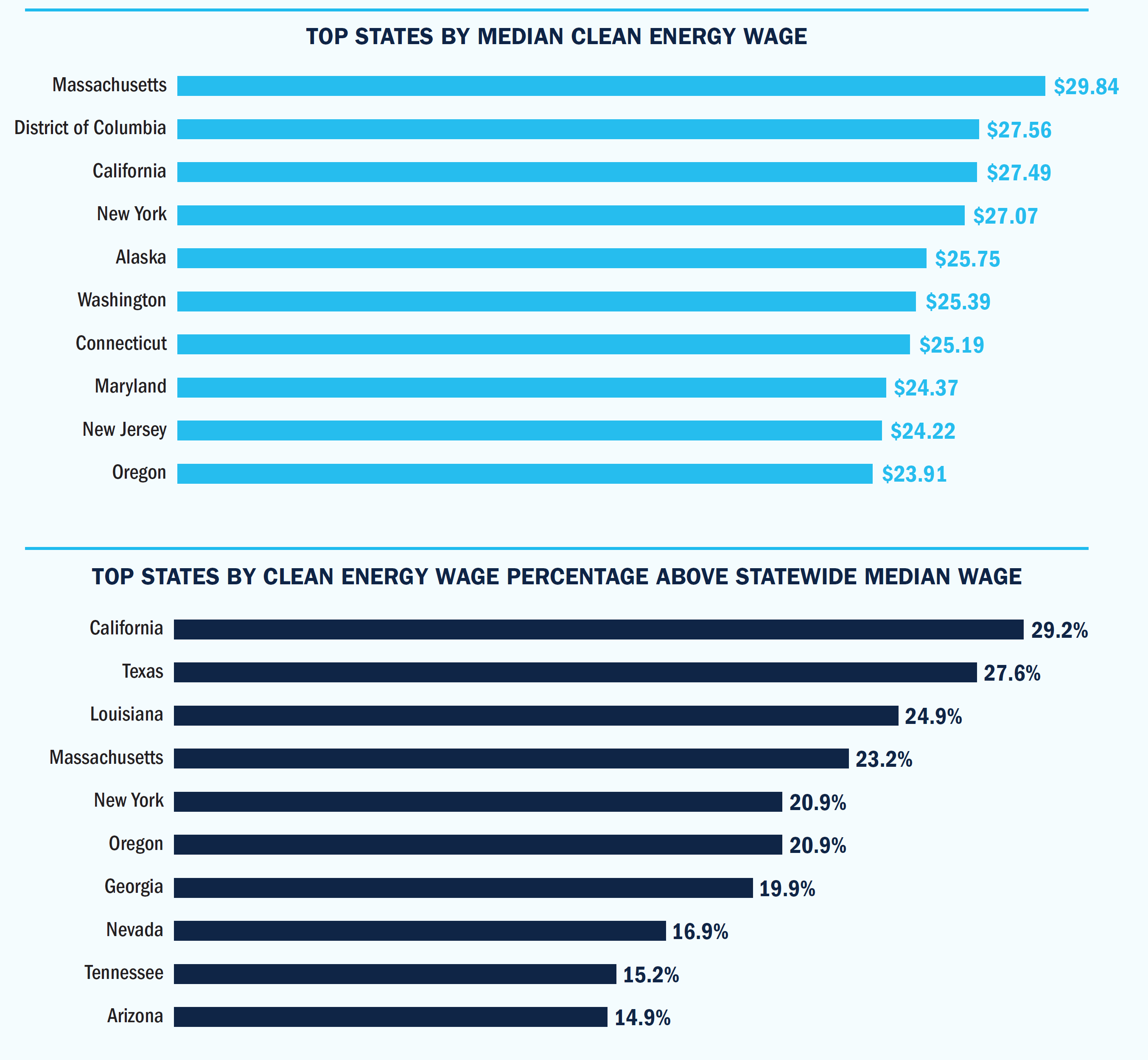
Oregon is among the top states in the country where “clean energy” jobs pay particularly well compared to the statewide median wage, according to a new report. The median hourly wage for clean energy jobs in Oregon in 2019 was $23.91, 20.9 percent higher than the median wage for all jobs.

Wind, solar jobs pay more than average, study finds

Wages for renewable and other low-carbon energy jobs also are inching above the wages paid for some traditional energy jobs in the coal, natural gas and petroleum-based fuels industries.  The study found that those fossil fuel jobs paid an average of $24.37 an hour last year compared with wind and solar jobs that pay $24.85 […]

Clean Jobs, Better Jobs

Date: October 22, 2020

About This Report

To understand the quality of employment opportunities in clean energy-related industries, E2 (Environmental Entrepreneurs), the American Council on Renewable Energy (ACORE), and the Clean Energy Leadership Institute (CELI) commissioned BW Research to analyze wages and benefits of occupations in clean energy industries in comparison to all occupations nationwide, sectors heavily impacted by the pandemic crisis, and other energy-related occupations.

This report analyzed clean energy wages, benefits and unionization rates across all five clean energy sectors (renewable energy generation, energy efficiency, clean fuels, clean vehicles, and grid modernization and storage) with detailed demographic data for 15 specific clean energy occupations, and how they compare with similar jobs in other industries. Also detailed in the report are state-specific wage findings for all 50 states and the District of Columbia.

Key Findings

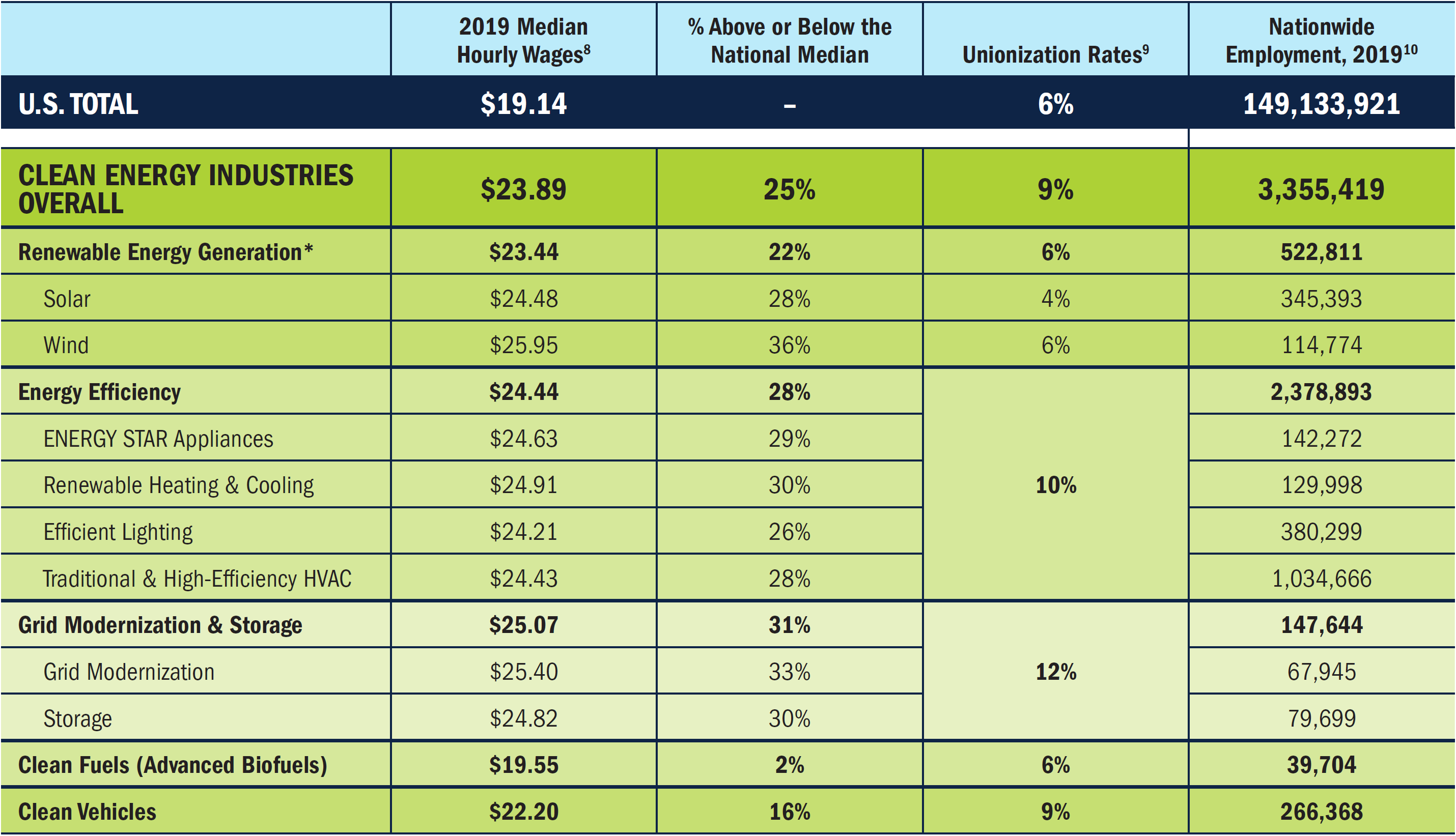
The Clean Jobs, Better Jobs report is the first comprehensive analysis of wages and benefits across the clean energy sector. According to the report, workers in renewable energy, energy efficiency, grid modernization and storage, clean fuels and clean vehicles earned a median hourly wage of $23.89 in 2019 compared with the national median wage of $19.14. In addition, jobs in many clean energy sectors are more likely to be unionized and come with health care and retirement benefits than the rest of the private sector, the analysis shows.

Clean Jobs, Better Jobs comes amid the growing national dialogue around clean energy as federal and state leaders look for ways to restart the economy. The findings underscore the opportunity to advance smart clean energy policies that create higher-wage opportunities putting Americans back to work quickly rebuilding a cleaner, more resilient and more equitable economy. The report also provides detailed wage, benefit, education and demographic data for 15 specific clean energy occupations, and how they compare with similar jobs in other industries outside of clean energy.

Overall, median wages in clean energy are significantly higher than median wages in sectors such as retail, services, recreation and accommodations, especially when it comes to entry-level wages. Solar energy workers earn $24.48 an hour, while wind and grid modernization jobs pay on average more than $25 an hour. Energy efficiency – the largest employer in the nation’s energy sector – supports a median hourly wage of $24.44, about 28% above the national median.

Many clean energy jobs also paid better than fossil fuel jobs. Jobs in coal, natural gas and petroleum fuels paid $24.37 an hour, while solar and wind jobs combined for a $24.85 median hourly wage. Clean energy industries also employed about three times more workers than fossil fuels did in 2019, and, unlike fossil fuel jobs, clean energy jobs are available in every state, regardless of geology or geography.

Before COVID-19, clean energy had been one of the nation’s fastest-growing sectors. At the end of 2019, clean energy employed nearly 3.4 million workers across 99% of U.S. counties, according to E2’s Clean Jobs America report.

Wages & Unionization Rates By Industry, 2019
States Most Impacted
Download

The complete report is available for download at this link.

Looking for More Info?
The analysis expands on data from the 2020 U.S. Energy and Employment Report (USEER) produced by the Energy Futures Initiative (EFI) in partnership with the National Association of State Energy Officials (NASEO), using data collected and analyzed by the BW Research Partnership. The report was released in March 2020 and is available at www.usenergyjobs.org. E2 is a partner on the USEER, the fifth installment of the energy survey first released by the Department of Energy in 2016 and subsequently abandoned under the Trump administration. Clean energy jobs have grown every year since the first report was released in 2016.

If you are looking for additional insight into this report or E2’s more than a dozen other annual clean energy employment reports, visit e2.org/reports. You can also contact E2 Communications Director Michael Timberlake ([email protected]).

Sign-Up for Email Updates

"*" indicates required fields

This field is for validation purposes and should be left unchanged.

View Report »

SoCap 2020

SoCap 2020 is a weeklong virtual event covering climate action, water stewardship and corporate sustainability. October 19 – 23, the global impact community will come together to connect, learn and collaborate on unlocking the power of markets for impact. Join innovators from across the world who are building the impact economy and participate to build […]

Washington State Solar Summit

The 2020 Virtual Washington State Solar Summit will be a one day conference held online Friday, October 16, 2020 with presentations covering topics relevant to the Washington solar industry. Solar Summit attendees typically include representatives from solar installation companies, utilities, manufacturers, distributors, engineers, tribes, city and state government agencies, policy makers, consultants, educators and more. EVENT FORMAT […]

Climate Action & Economic Equity in Oregon

E2 and our business community are well-versed on the climate crisis—highlighting the economic imperative of climate action is a central pillar of our advocacy work. However, climate is not the only crisis facing our country, nor the only one that demands action. For too long, the US has experienced growing economic inequality, especially along racial […]

Nearly 500k clean energy workers remain unemployed since pandemic start

Things got slightly better for the sector in September, when 12,500 jobs were added. The 477,900 unemployment figure is down from the 594,300 jobs that had been lost in March and April. However, clean energy job growth last month was 60 percent slower than job growth nationwide, the analysis said.

Clean Energy & COVID-19 Crisis | September 2020 Unemployment Analysis

Date: October 8, 2020

Clean Energy Unemployment Claims in COVID-19 Aftermath, September 2020

12,500 jobs in clean energy were added in September, leaving almost 14% of the sector’s pre-COVID-19 workforce unemployed according to the latest analysis of federal unemployment filings prepared by BW Research for E2 (Environmental Entrepreneurs), E4TheFuture and the American Council on Renewable Energy (ACORE).

Overall, September’s job gains represented a 0.4% increase in nationwide clean energy jobs and leaves nearly more than 477,900 clean energy workers still out of work in a year the industry projected to add over 175,000 jobs,

While September represents the fourth straight month of job growth for the industry after three months of devastating job losses,  just one out of every five clean energy jobs lost between March and May has come back, according to the monthly report. The slow growth is consistent nationwide; no state saw more than a 0.7% increase in employment in September, with 23 states and the District of Columbia adding fewer than 100 jobs each.

In 2018 and 2019, clean energy created about 190,000 new jobs nationwide. Before the coronavirus pandemic, employers projected that more than 175,000 jobs would be added in 2020, according to the 2020 U.S. Energy & Employment Report (USEER) employer survey.

While September showed some signs of national economic growth, alarming trends continued. Weekly unemployment claims remain at historic highs, and long-term and permanent unemployment rates have sharply risen since March. With federal Paycheck Protection Program (PPP) funds all but exhausted, and negotiations for an additional round of more targeted stimulus relief in question, more layoffs could be imminent.

Before COVID-19, nearly 3.4 million Americans across all 50 states and the District of Columbia worked in clean energy occupations, including renewable energy, energy efficiency, grid modernization, clean vehicles and fuels. That’s more people than work in real estate, banking or agriculture in the U.S., and three times the number of Americans that worked in fossil fuels, according to E2’s Clean Jobs America report.

By Industry Job Losses, September 2020

SECTOR MARCH APRIL MAY JUNE JULY AUGUST SEPT. SECTOR TOTAL
Energy Efficiency -103,298 -309,584 -18,880 +71,786 +6,836 +8,116 +8,354 -336,670
Renewables -23,739 -71,705 -4,272 +17,287 +1,918 2+,571 +2,273 -75,669
Clean Vehicles -11,399 -35,070 -2,059 +10,335 +896 +2,182 +965 -34,151
Grid & Storage -6,517 -19,666 -1,166 +4,561 +428 +482 +510 -21,368
Clean Fuels -2,186 -10,390 -657 +2,351 +296 +205 +378 -10,004
MONTHLY TOTAL -147,139 -446,416 -27,035 +106,320 +10,373 +13,556 +12,479 -477,862

States With The Most Total Job Losses, September 2020

State Total Losses Percent of Clean Energy Workforce
California 81,826 14.90%
Georgia 26,899 31.20%
Florida 25,166 15.00%
Michigan 23,341 17.60%
Texas 22,669 9.20%
North Carolina 19,533 17.00%
Pennsylvania 17,883 18.40%
Washington 17,693 19.90%
Ohio 15,519 13.40%
New York 14,865 9.10%

Download

For a full breakdown of clean energy jobs losses in each state, download the full analysis here

Looking for More Info?

The analysis expands on data from the 2020 U.S. Energy and Employment Report (USEER) produced by the Energy Futures Initiative (EFI) in partnership with the National Association of State Energy Officials (NASEO), using data collected and analyzed by the BW Research Partnership. The report was released in March 2020 and is available at www.usenergyjobs.org. E2 is a partner on the USEER, the fifth installment of the energy survey first released by the Department of Energy in 2016 and subsequently abandoned under the Trump administration.

If you are looking for additional insight into this report or E2’s more than a dozen other annual clean energy employment reports, visit e2.org/reports. You can also contact E2 Communications Director Michael Timberlake ([email protected]).

Sign-Up for Email Updates

"*" indicates required fields

This field is for validation purposes and should be left unchanged.

View Report »

Fact-checking the climate change claims made during the first presidential debate

Biden was right, though, when he claimed that weatherizing buildings will create “thousands and thousands of jobs.” According to a report by Environmental Entrepreneurs, energy efficiency jobs grew by 76,000 in 2018, and nationwide the field “employs twice the number of workers” than the fossil-fuel industry does. Since buildings that lose energy lose money for […]

E2: House Energy Bill Important Foundation for Climate; Stimulus for Clean Energy Still Needed

WASHINGTON – The U.S House is poised to pass the Clean Economy Jobs and Innovation Act, which includes the potential for funding increases to important energy efficiency programs; solar energy development for low-income communities; research in energy storage and provisions to address environmental justice issues. It also includes a phase-out of Hydrofluorocarbons (HFCs), a greenhouse […]

Sign Up for Email Updates


"*" indicates required fields

This field is for validation purposes and should be left unchanged.

Our Latest Press Releases


Releases

REPORT: Colorado clean energy sector grew by 4 percent, added 2K jobs in 2024

DENVER, CO (Dec. 10, 2025) – Clean energy jobs grew more than five times faster in Colorado than the rest of the state's economy in 2024, raising the total number of clean energy workers in the state to 69,859 – 18th most in the country – according to the s...


Releases

STATEMENT: Federal Rollback of Auto Fuel Efficiency Standards Will Increase Costs for Consumers, Businesses

The National Highway Traffic Safety Administration (NHTSA) is expected to announce the Administration’s intent to weaken federal Corporate Average Fuel Economy (CAFE) standards for vehicles. Such a dramatic shift in policy would halt five decades of progres...


Releases

Companies Cancel $4.4 Billion in Clean Energy Projects; $28 Billion, 30K Jobs Lost in 2025

WASHINGTON –Businesses canceled, closed, and scaled back more than $4.4 billion worth of large-scale factories and clean energy projects from late-September through October, bringing the total cost of projects cancelled in the private-sector to over $28.7 b...


Donate Today