Clean Jobs Washington 2020

Date: November 24, 2020

Primed to Lead Washington’s Economic Recovery

At the onset of 2020, Washington’s clean energy economy was coming off another year of solid growth, further establishing itself as the backbone—and future—of the Evergreen State’s energy sector. With more than 85,000 clean energy workers, the state ranked 13th for clean energy employment. Illustrating the important role this sector plays in Washington’s economy, the clean energy industry accounts for more than 25% of all construction jobs in the state. Importantly, these jobs’ wages and benefits compare favorably to other industries; E2’s recent Clean Jobs, Better Jobs report shows that the median wage for Washington’s clean energy economy pays nearly 11% more than the state’s overall median wage.

But following five straight years of job growth, Washington’s clean energy economy has been derailed by the economic recession driven by COVID-19. state policymakers have a central role to play as well. Tremendous job creation can be delivered by staying the course on implementation of existing clean energy policy, prime among them Washington’s Clean Energy Transformation Act. To ensure continued recovery and economic development in the years to come, state lawmakers should adopt additional policies in 2021 to drive investment and job growth in the clean energy economy. These policy opportunities—including a clean fuels program, clean truck standards, a state-wide limit on carbon pollution, and carbon pricing—can drive strong investments in climate solutions across the state. If well-designed, these and other policies have the potential to leverage Washington’s clean energy economy as an engine for broader economic recovery. Through October, more than 17,000 clean energy workers—almost one-fifth of Washington’s clean energy workforce pre-COVID—remain out of work.

Clean Jobs Washington 2020 comes at a critical juncture in the state’s efforts to recover from the COVID-19 health and economic crises. With the Washington state Legislature set to reconvene in January, policymakers will have the opportunity to leverage clean energy as an engine for broader economy recovery by enacting policies to get clean energy back on its growth trajectory. Policies such as a clean fuels program, clean truck standards, a state-wide limit on carbon pollution, and carbon pricing can drive investments in climate solutions and bring robust economic growth across the state.

This report details the size, scope, and diversity of this core Washington state employment sector, the troubles it is currently facing due to the pandemic, and the promise that strategic policy direction and stimulus investments in clean energy hold to drive a durable and sustainable recovery for Washington’s economy. In addition to detailing sector-by-sector employment, Clean Jobs Washington 2020 also breaks down jobs at the city, county, legislative and congressional district levels. See more details here.

A BIGGER PICTURE

This report focuses solely on the energy sector of the economy and does not include jobs in retail trade, repair services, water or waste management, and indirect employment or induced employment.

WASHINGTON CLEAN JOB EMPLOYMENT Q4 2019

  • Energy Efficiency – 64,930 jobs
  • Renewable Energy – 11,189  jobs
  • Solar Energy – 5,081 jobs
  • Clean Vehicles – 3,351 jobs
  • Wind Energy – 3,310 jobs
  • Energy Storage – 2,451 jobs
  • Clean Fuels – 1,936 jobs
  • Grid Modernization – 1,176 jobs
  • ALL Clean Energy Sectors – 85,035 jobs

OTHER FINDINGS

  • Small businesses are the backbone of Washington’s clean energy economy. More than two out of every three (69%) clean energy workers were employed at companies with fewer than 20 workers;
  • 1 in 4 construction jobs in Washington are in clean energy occupations, from solar installers and site workers to electricians, HVAC technicians, lighting technicians, carpenters and others who work in energy efficiency;
  • Washington ranked in the top 15 for jobs in 12 sectors and subsectors in 2019 – helping the state diversify jobs growth across the clean energy economy;
  • Clean energy accounts for 55% of all energy sector jobs in Washington and made up 74% of the sector’s total job growth in 2019;

DOWNLOAD

The complete report is available for download at this link.

Previous Reports

Looking For More Info?
This report follows E2’s Clean Jobs America analysis which found the clean energy jobs account for nearly 3.3 million jobs across all 50 states and the District of Columbia. Both reports expand on data from the U.S. Energy and Employment Report (USEER) produced by the Energy Futures Initiative (EFI) in partnership with the National Association of State Energy Officials (NASEO), using data collected and analyzed by the BW Research Partnership. E2 is a partner on the USEER, the fifth installment of the energy survey first released by the Department of Energy in 2016.

If you are looking for additional insight into E2’s Clean Jobs Washington 2019 or our other Clean Jobs America reports, visit e2.org/reports. You can also contact E2 Communications Director Michael Timberlake ([email protected]). An FAQ is also available here to answer any questions.

View Report »

Energy Efficiency Jobs in America: 2020

Date: November 19, 2020

America’s Largest Energy Sector is Poised to Power U.S. Recovery.

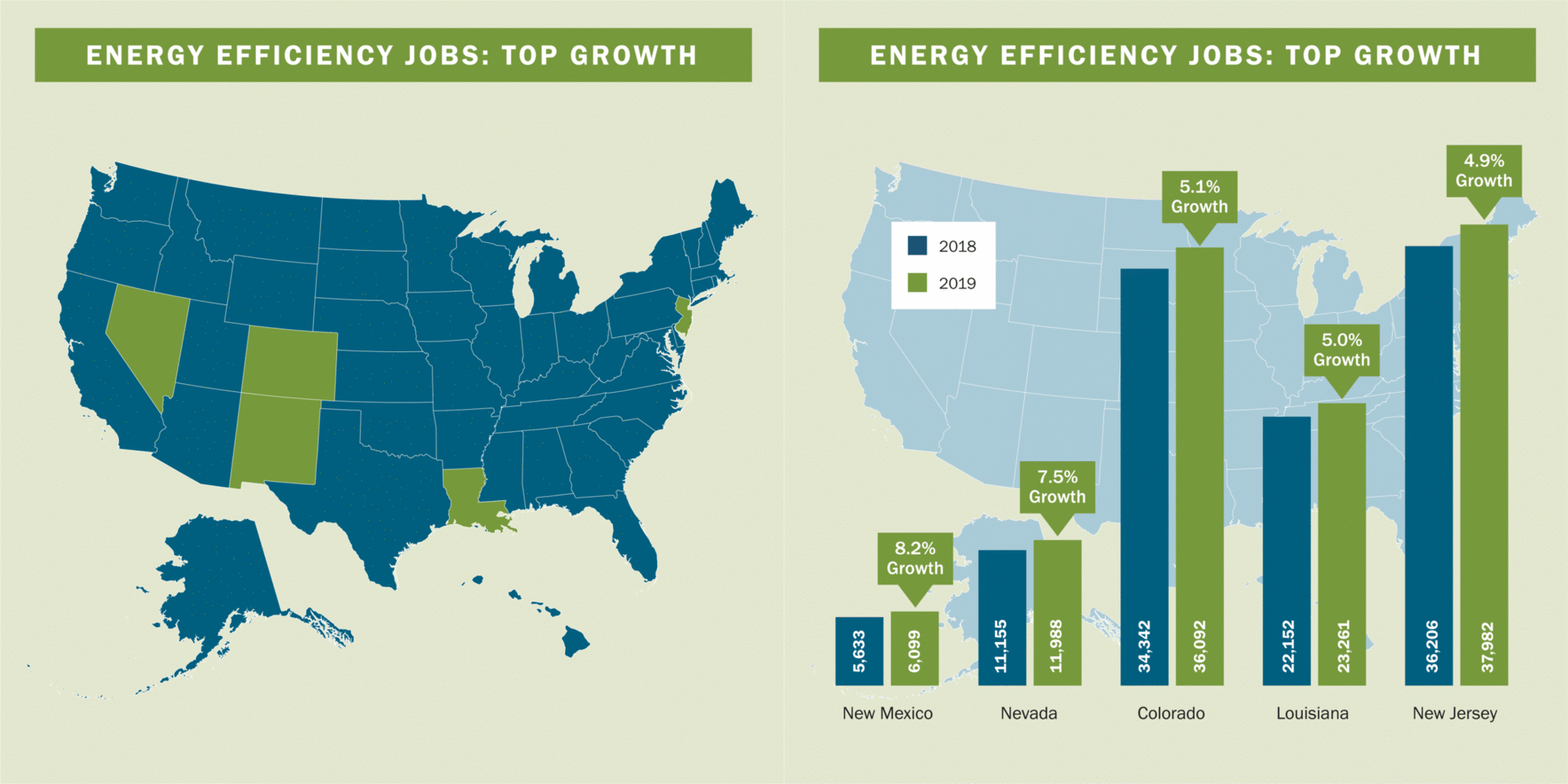
Energy Efficiency (EE)—the largest U.S. energy sector—can repower America’s economy as we work to overcome the economic effects of the pandemic. As lawmakers and policymakers seek to get America back to work after the COVID-19 health and economic crisis, every job matters. From 2015 to 2019, the energy efficiency sector became one of the biggest, fastest-growing, and most beneficial sectors for both our economy and our environment.

This report details the size of this important employment sector, the troubles it is facing due to COVID-19, and how focusing recovery policies on efficiency can help boost America’s economy— quickly and for the long run.

The 20210 Energy Efficiency Jobs in America report includes an 11-page national summary and individual factsheets for all 50 U.S. states and the District of Columbia that include more detailed findings including job totals for every congressional and legislative district, industry and technology breakdowns, and maps of every state’s top counties.

This annual report focuses solely on the energy sector of the economy. Jobs in retail trade, vehicle efficiency-related work, and the 4.2 million jobs related to efficient manufacturing processes are excluded from these numbers.

Download

To download the national summary, click here or the report cover above.

For all 51 individual factsheets, visit https://ee.e4thefuture.org/ or  .

Previous Reports

AMERICA’S TOP 10 STATES | 2019 Energy Efficiency Jobs

QUESTIONS & FAQ

For questions on this report, methodology, reported job numbers, or requests for specific additional data, email E2 Communications Director Michael Timberlake ([email protected]). An FAQ for the report, including answers to questions on methodology, is available here.

LOOKING FOR MORE?

If you are looking for additional insight into E4TheFuture and E2’s other research and publications on the energy economy, visit E4TheFuture’s Publications homepage or E2’s Reports homepage.

This report follows E2’s Clean Jobs America analysis which found the clean energy jobs account for nearly 3.4 million jobs across all 50 states and the District of Columbia. Both reports expand on data from the U.S. Energy and Employment Report (USEER) produced by the Energy Futures Initiative (EFI) in partnership with the National Association of State Energy Officials (NASEO), using data collected and analyzed by the BW Research Partnership. E2 and E4TheFuture is a partner on the USEER, the fifth installment of the energy survey first released by the Department of Energy in 2016.

View Report »

Biden’s climate plans: A ‘historic tipping point’?

Höhne added that Biden’s 2035 goal makes economic sense, in a country suffering from a coronavirus slowdown and where about half the states are already moving in a similar direction on renewable energy. “This is something that he can really drive forward. He has the … economic situation on his side — it’s simply cheaper […]

Clean Energy & COVID-19 Crisis | October 2020 Unemployment Analysis

Date: November 12, 2020
The revised memo based on the BLS updates to the data can be found here.

Clean Energy Unemployment Claims in COVID-19 Aftermath, October 2020

**This memo has been revised and is available here. The numbers presented in the original Nov. 12, 2020 memo are based on data issued by the Bureau of Labor Statistics (BLS) on Nov. 6, 2020. An update to that data was made by the BLS in the Feb. 5, 2021  Employment Situation report**

23,800 jobs in clean energy were added in October, leaving 13% of the sector’s pre-COVID-19 workforce unemployed according to the latest analysis of federal unemployment filings prepared by BW Research for E2 (Environmental Entrepreneurs), E4TheFuture and the American Council on Renewable Energy (ACORE).

Overall, October’s job gains represented a 0.8% increase in nationwide clean energy jobs and leaves more than 454,000 clean energy workers still out of work. At the current pace, it would take the industry over 18 months to reach pre-COVID employment levels and 23 months to meet the sector’s projected 2020 job growth before the pandemic.

While October represents the fifth straight month of job growth for the industry after three months of devastating job losses,  three out of every four clean energy workers who lost their jobs at the beginning of the crisis remain out of work, according to the monthly report. The slow growth is consistent nationwide; 44 states saw below 1% growth in October, with 23 states and the District of Columbia adding fewer than 200 jobs each.

In 2018 and 2019, clean energy created about 190,000 new jobs nationwide. Before the coronavirus pandemic, employers projected that more than 175,000 jobs would be added in 2020, according to the 2020 U.S. Energy & Employment Report (USEER) employer survey. Before COVID-19, nearly 3.4 million Americans across all 50 states and the District of Columbia worked in clean energy occupations, including renewable energy, energy efficiency, grid modernization, clean vehicles and fuels. That’s more people than work in real estate, banking or agriculture in the U.S., and three times the number of Americans that worked in fossil fuels, according to E2’s Clean Jobs America report.

By Industry Job Losses, October 2020

Sector March  April  May   June  July August Sept. Oct. Total 
Energy Efficiency -103,298 -309,584 -18,880 71,786 6,836 8,116 8,354 16,806 -319,864
Renewables -23,739 -71,705 -4,272 17,287 1,918 2,571 2,273 3,965 -71,704
Clean Vehicles -11,399 -35,070 -2,059 10,335 896 2,182 965 1,615 -32,536
Grid & Storage -6,517 -19,666 -1,166 4,561 428 482 510 1,042 -20,326
Clean Fuels -2,186 -10,390 -657 2,351 296 205 378 409 -9,594
TOTAL -147,139 -446,416 -27,035 106,320 10,373 13,556 12,479 23,838 -454,024

States With The Most Total Job Losses, October 2020

State Total Losses Percent of Clean Energy Workforce
California 76,638 13.90%
Georgia 26,540 30.70%
Florida 24,000 14.30%
Michigan 22,671 17.00%
Texas 20,765 8.40%
North Carolina 18,340 16.00%
Pennsylvania 17,340 17.90%
Washington 17,124 19.20%
Ohio 14,774 12.70%
New York 14,329 8.10%

Download

For a full breakdown of clean energy jobs losses in each state, download the full analysis here

Looking for More Info?

The analysis expands on data from the 2020 U.S. Energy and Employment Report (USEER) produced by the Energy Futures Initiative (EFI) in partnership with the National Association of State Energy Officials (NASEO), using data collected and analyzed by the BW Research Partnership. The report was released in March 2020 and is available at www.usenergyjobs.org. E2 is a partner on the USEER, the fifth installment of the energy survey first released by the Department of Energy in 2016 and subsequently abandoned under the Trump administration.

If you are looking for additional insight into this report or E2’s more than a dozen other annual clean energy employment reports, visit e2.org/reports. You can also contact E2 Communications Director Michael Timberlake ([email protected]).

Sign-Up for Email Updates

"*" indicates required fields

This field is for validation purposes and should be left unchanged.

View Report »

Opinion: Low-carbon economic recovery a better path for Michigan

Prior to the pandemic, clean energy was one of the fastest growing industries in Michigan, supporting over 125,000 jobs. New analyses demonstrate we can return to this flourishing clean energy economy if policymakers take action beyond short-term emergency measures. … It’s not just a matter of forecasting future impacts. Climate action is already working for the people and […]

Clean energy jobs pay 25 percent more than the national median wage

A new study reveals that jobs in the burgeoning renewable and clean energy sector can pay up to 25 percent more than the national median wage and are more likely to come with health insurance and retirement benefits. The Houston Chronicle summarizes results from a study of federal occupational wage and benefits data, specifically within the […]

REPORT: Clean Energy Jobs Pay 25% More Than National Median

First-of-its-kind report shows clean energy jobs more likely to include health care, retirement benefits Median wages in solar, wind, grid modernization higher than jobs in coal, natural gas and petroleum fuels Findings support calls to power U.S. recovery with clean energy jobs WASHINGTON (October 22, 2020) –  Clean energy jobs paid 25% more than the […]

Politico Morning Energy: By the Numbers

BY THE NUMBERS: Clean energy jobs paid 25 percent more than the national median wage in 2019, according to new analysis Thursday from Environmental Entrepreneurs, the American Council on Renewable Energy, and the Clean Energy Leadership Institute. Workers in the sector earned a median hourly wage of $23.89 in 2019 compared with the national median wage of $19.14, […]

Sign Up for Email Updates


"*" indicates required fields

This field is for validation purposes and should be left unchanged.

Our Latest Press Releases


Releases

REPORT: Colorado clean energy sector grew by 4 percent, added 2K jobs in 2024

DENVER, CO (Dec. 10, 2025) – Clean energy jobs grew more than five times faster in Colorado than the rest of the state's economy in 2024, raising the total number of clean energy workers in the state to 69,859 – 18th most in the country – according to the s...


Releases

STATEMENT: Federal Rollback of Auto Fuel Efficiency Standards Will Increase Costs for Consumers, Businesses

The National Highway Traffic Safety Administration (NHTSA) is expected to announce the Administration’s intent to weaken federal Corporate Average Fuel Economy (CAFE) standards for vehicles. Such a dramatic shift in policy would halt five decades of progres...


Releases

Companies Cancel $4.4 Billion in Clean Energy Projects; $28 Billion, 30K Jobs Lost in 2025

WASHINGTON –Businesses canceled, closed, and scaled back more than $4.4 billion worth of large-scale factories and clean energy projects from late-September through October, bringing the total cost of projects cancelled in the private-sector to over $28.7 b...


Donate Today