Date: October 22, 2020
 About This Report
To understand the quality of employment opportunities in clean energy-related industries, E2 (Environmental Entrepreneurs), the American Council on Renewable Energy (ACORE), and the Clean Energy Leadership Institute (CELI) commissioned BW Research to analyze wages and benefits of occupations in clean energy industries in comparison to all occupations nationwide, sectors heavily impacted by the pandemic crisis, and other energy-related occupations.
This report analyzed clean energy wages, benefits and unionization rates across all five clean energy sectors (renewable energy generation, energy efficiency, clean fuels, clean vehicles, and grid modernization and storage) with detailed demographic data for 15 specific clean energy occupations, and how they compare with similar jobs in other industries. Also detailed in the report are state-specific wage findings for all 50 states and the District of Columbia.
Key Findings
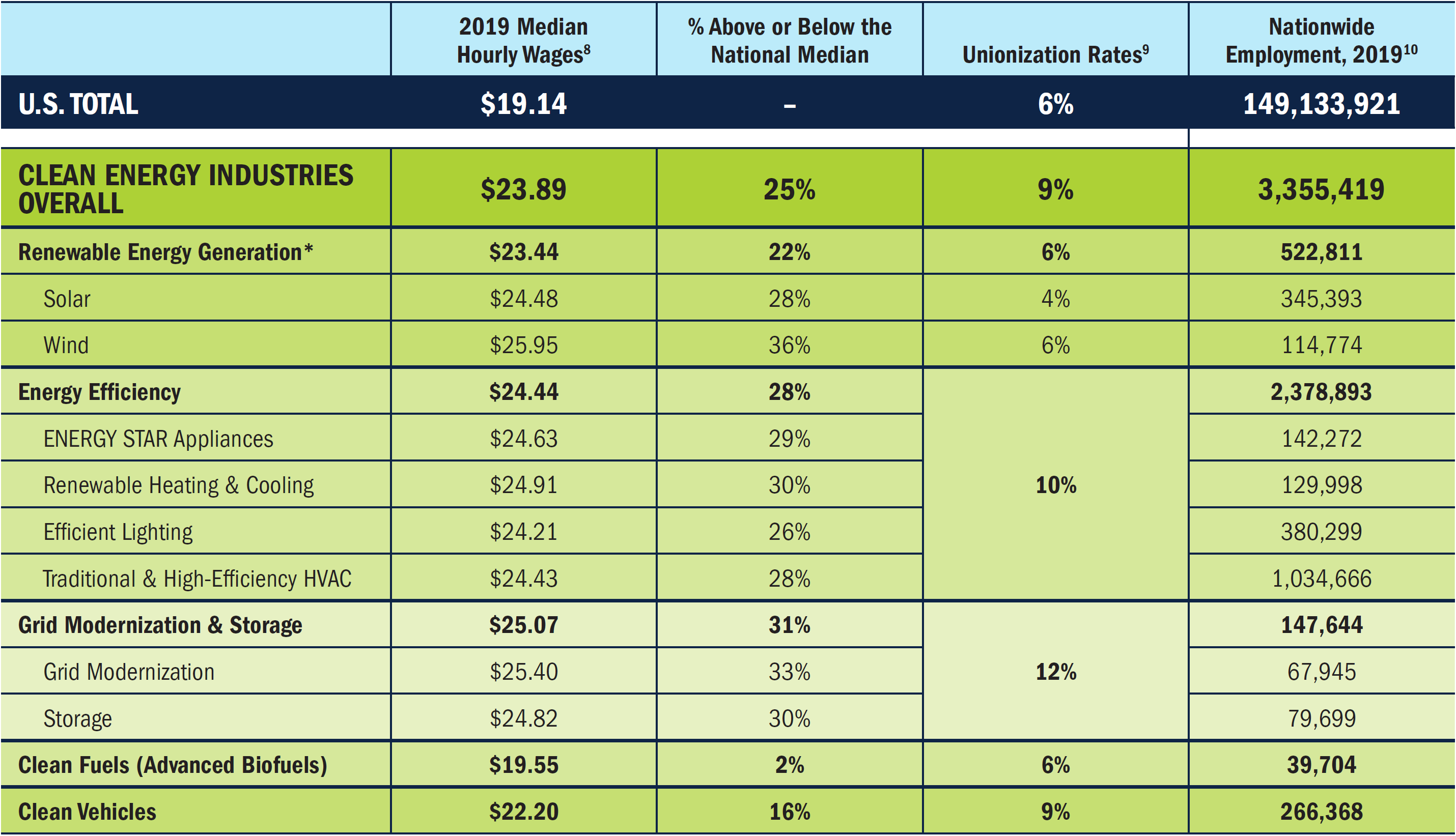
The Clean Jobs, Better Jobs report is the first comprehensive analysis of wages and benefits across the clean energy sector. According to the report, workers in renewable energy, energy efficiency, grid modernization and storage, clean fuels and clean vehicles earned a median hourly wage of $23.89 in 2019 compared with the national median wage of $19.14. In addition, jobs in many clean energy sectors are more likely to be unionized and come with health care and retirement benefits than the rest of the private sector, the analysis shows.
Clean Jobs, Better Jobs comes amid the growing national dialogue around clean energy as federal and state leaders look for ways to restart the economy. The findings underscore the opportunity to advance smart clean energy policies that create higher-wage opportunities putting Americans back to work quickly rebuilding a cleaner, more resilient and more equitable economy. The report also provides detailed wage, benefit, education and demographic data for 15 specific clean energy occupations, and how they compare with similar jobs in other industries outside of clean energy.
Overall, median wages in clean energy are significantly higher than median wages in sectors such as retail, services, recreation and accommodations, especially when it comes to entry-level wages. Solar energy workers earn $24.48 an hour, while wind and grid modernization jobs pay on average more than $25 an hour. Energy efficiency – the largest employer in the nation’s energy sector – supports a median hourly wage of $24.44, about 28% above the national median.
Many clean energy jobs also paid better than fossil fuel jobs. Jobs in coal, natural gas and petroleum fuels paid $24.37 an hour, while solar and wind jobs combined for a $24.85 median hourly wage. Clean energy industries also employed about three times more workers than fossil fuels did in 2019, and, unlike fossil fuel jobs, clean energy jobs are available in every state, regardless of geology or geography.
Before COVID-19, clean energy had been one of the nation’s fastest-growing sectors. At the end of 2019, clean energy employed nearly 3.4 million workers across 99% of U.S. counties, according to E2’s Clean Jobs America report.
Wages & Unionization Rates By Industry, 2019
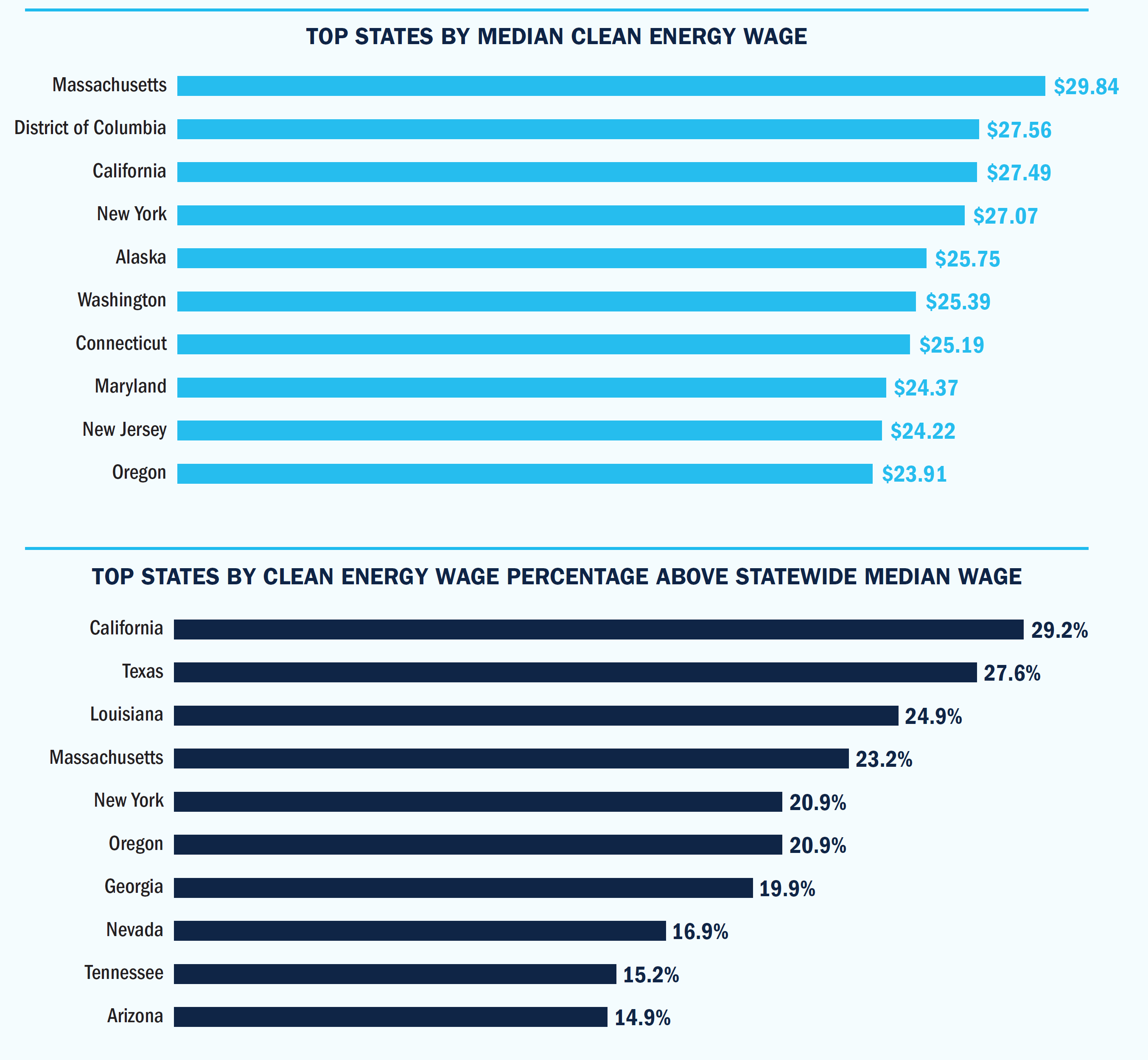
States Most Impacted
Download
The complete report is available for download at this link.
Looking for More Info?
 The analysis expands on data from the 2020 U.S. Energy and Employment Report (USEER) produced by the Energy Futures Initiative (EFI) in partnership with the National Association of State Energy Officials (NASEO), using data collected and analyzed by the BW Research Partnership. The report was released in March 2020 and is available at www.usenergyjobs.org. E2 is a partner on the USEER, the fifth installment of the energy survey first released by the Department of Energy in 2016 and subsequently abandoned under the Trump administration. Clean energy jobs have grown every year since the first report was released in 2016.
If you are looking for additional insight into this report or E2’s more than a dozen other annual clean energy employment reports, visit e2.org/reports. You can also contact E2 Communications Director Michael Timberlake ([email protected]).
View Report »