Climate economics: Costs, opportunities – and your pocketbook

Climate change is a serious and growing threat to the economy of Virginia and the country as a whole. Climate-related disasters inflicted nearly $150 billion in damage to the national economy last year, including up to $500 million in damage in Virginia alone. And those figures do not include hampered military preparedness, public funds spent […]

Building Opportunity: New York

Date: April 26, 2022

The Jobs, Economic and Equity Benefits of Decarbonizing
and Electrifying Buildings Across the Empire State
 

Summary

New York State is home to more than 120,000 workers engaged in work directly related to decarbonizing and electrifying buildings across the state. This includes work like installing electric induction stoves in apartment buildings on Staten Island, replacing old insulation in the attics of single-family homes in Plattsburgh and fitting new pipes for geothermal heating and cooling systems in commercial buildings in Rochester.

To better understand how decarbonizing and electrifying New York’s buildings would impact the state’s labor market, E2 took a deeper dive into the state’s overall building decarbonization and electrification employment data.

By looking at five employment areas — technology; value chain; residential and commercial energy efficiency; electrification, building envelope and other energy efficiency; and a specific occupational analysis — we found that:

  • In New York State, building decarbonization and electrification employment is 2.2 times greater than employment in fossil fuels as they relate to buildings.
  • While New York City, Long Island and the mid-Hudson Valley are home to the majority of the state’s building decarbonization and electrification jobs, Western New York, the Finger Lakes, Central New York, the Southern Tier, the North Country and every other region in the state is home to thousands of building decarbonization workers, and all counties and regions stand to gain from stronger building decarbonization and electrification policies.
  • Statewide, there are 73,000 workers involved in residential building decarbonization; nearly 48,000 work helping to decarbonize commercial buildings, suggesting broad opportunities across the state’s building stock, from ranch houses to apartments and high-rise office buildings to commercial buildings and industrial parks.
  • In 2020, average annual wages for five occupations within building decarbonization and electrification in New York State ranged from $48,800 (for workers who are involved in insulation, floors, ceilings and walls) to $81,200 (electricians)
  • The education required for entry-level jobs and the on-the-job training received varies
    depending on the occupation, suggesting a broad range of opportunities for workers
    across New York State.

Building Decarbonization and Electrification Employment by Technology, 2020

Energy Star 36,005
High Efficiency HVAC & Renewable H&C 35,315
Traditional HVAC 32,520
Other 8,993
Advanced Materials & Insulation 8,128
Total 120,961

Jobs Growth Potential 

While 120,000 workers represent a sizable segment of New York State’s current overall labor force, the number of people who work on building decarbonization and electrification is expected to dramatically increase in the coming decades. By 2050, over 400,000 New Yorkers could be expected to work in building decarbonization and electrification — nearly four times as many as today.

Policy Leading the Way

Power sector policies have helped put New York at the center of the nation’s rapidly growing clean energy industry. In 2019 the state enacted the Climate Leadership and Community Protection Act (CLCPA), which sets targets and timelines for economy-wide emissions reductions, requires at least 35 percent of climate action benefits directly impact environmental justice and disadvantaged communities, and establishes the New York Climate Action Council (CAC) to oversee the efforts required to meet these nation-leading climate and equity commitments.

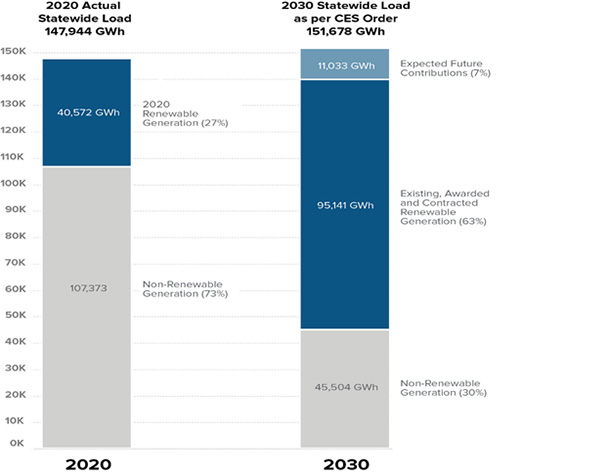
The state is already on track to meet CLCPA goals of sourcing 70 percent of its electricity supply from renewable energy by 2030, and making it 100 percent emissions-free by 2040. With buildings now representing a significant portion of economy-wide emissions, additional policies that could help equitably accelerate this shift include: better building codes; standards that help make appliances and other equipment found in residences and commercial buildings more efficient; statewide legislation that helps modernize new buildings; facilitating more disclosure of how buildings consume energy; eliminating fossil fuel subsidies while aligning incentives with state and local climate goals; and scaling up green, affordable housing.
Credit: NYSERDA.

DOWNLOAD

Download the complete report at at this link.

BACKGROUND

This is the first Building Opportunity: New York report produced by E2 based on analysis of the USEER, which was first released by the DOE in 2016. E2 was an original proponent of the DOE producing the USEER and was a partner on the reports produced by the Energy Futures Initiative (EFI) and National Association of State Energy Officials (NASEO) after the Trump administration abandoned it in 2017.

View Report »

Proposed California EV regs could be adopted by other states

“The strong policy leadership from Sacramento over the past 20 years has not only driven strong job growth but has helped California develop into a global hub of clean vehicle innovation and development,” said Andy Wunder, Western states advocate for E2, a national, nonpartisan group of business leaders, investors and professionals.

Offshore Wind to Generate Billions for North Carolina Economy

The state must actively pursue development of offshore wind projects to capture the maximum economic opportunity RALEIGH, N.C. – A new analysis shows that constructing 2.8-gigawatts of offshore wind off North Carolina’s coast by 2030 will result in a net economic benefit of up to $4.6 billion for the state’s economy. The North Carolina Offshore Wind […]

North Carolina Offshore Wind Cost-Benefit Analysis

Date: January 19, 2022

SUMMARY

Over the next decade offshore wind is expected to play a significant role in decarbonizing the U.S. electric sector, and especially along the East Coast. When states are considering offshore wind goals, they will certainly evaluate the myriad of associated costs and benefits.

This analysis was developed to help decision makers quantify some of the economic development and environmental benefits associated with offshore wind. This analysis calculates the costs and benefits associated with a single 2.8-gigawatt (GW) offshore wind project off the coast of North Carolina in operation by 2030. Both a base scenario, assuming a standard amount of local manufacturing/supply chain content, and a high local content (or “high”) scenario, were developed.

The high scenario assumes 100% local content for both the blades and offshore substations of a single 2.8GW theoretical project. Content assumptions are based on findings from the March 2021 offshore wind supply chain study conducted on behalf of the North Carolina Department of Commerce, which indicates these components being most likely to locate production in-state. While not within the scope of this calculation, it is important to highlight the compounded value that new or expanded offshore wind supply chain capabilities located in North Carolina will create. In addition to providing economic benefit to the state through projects developed off the coast of North Carolina, offshore wind manufacturers will also supply components for projects along the Atlantic coast or potentially across the country or the globe — generating continued economic benefit to the state, absent the cost of generating electricity.

RESULTS

DOWNLOAD

View and download the complete report at at this link.
View and download a one-page summary of the report’s key findings at this link.

BACKGROUND

Recently codified in state-level legislation, North Carolina has asserted the carbon-reduction goal of 70% by 2030 and to achieve carbon neutrality by mid-century4 . To that end, the Governor’s administration, the North Carolina General Assembly, and Duke Energy have all endeavored to examine pathways to reliably and costeffectively decarbonize the state’s electric grid5,6,7,8. While offshore wind has occasionally been an element of these discussions, due to relative cost and nascency of the U.S. offshore wind industry, it hasn’t been evaluated as a primary tool for decarbonization.

Absent from any of the decarbonization modeling or stakeholder processes conducted in the state since 2018 is the consideration of the economic benefits that accompany offshore wind. According to the American Wind Energy Association (AWEA), now the American Clean Power Association (ACP), an estimated 30GW of offshore wind deployment in the U.S. by 2030 could generate as much as $57 billion in economic output9 . As such, the inclusion of these benefits is critical when understanding the full value of the technology.

This analysis determines both the costs and benefits of a theoretical 2.8-gigawatt (GW) offshore wind project developed off the coast of North Carolina in operation by 2030 using industry-standard practices, data, and modeling tools. The costs and benefits are measured against one another to determine the net economic impact.

PREVIOUS REPORTS

View Report »

E2: NOAA Report Bolsters Case for Build Back Better

Major climate disasters cost the U.S. economy more than $145 billion last year, according to data released Monday by the National Oceanic and Atmospheric Administration (NOAA) today. The following is a statement from Bob Keefe, executive director of the national nonpartisan business group E2: “Climate change is killing our economy – and this new data […]

Sign Up for Email Updates


"*" indicates required fields

This field is for validation purposes and should be left unchanged.

Our Latest Press Releases


Releases

REPORT: Colorado clean energy sector grew by 4 percent, added 2K jobs in 2024

DENVER, CO (Dec. 10, 2025) – Clean energy jobs grew more than five times faster in Colorado than the rest of the state's economy in 2024, raising the total number of clean energy workers in the state to 69,859 – 18th most in the country – according to the s...


Releases

STATEMENT: Federal Rollback of Auto Fuel Efficiency Standards Will Increase Costs for Consumers, Businesses

The National Highway Traffic Safety Administration (NHTSA) is expected to announce the Administration’s intent to weaken federal Corporate Average Fuel Economy (CAFE) standards for vehicles. Such a dramatic shift in policy would halt five decades of progres...


Releases

Companies Cancel $4.4 Billion in Clean Energy Projects; $28 Billion, 30K Jobs Lost in 2025

WASHINGTON –Businesses canceled, closed, and scaled back more than $4.4 billion worth of large-scale factories and clean energy projects from late-September through October, bringing the total cost of projects cancelled in the private-sector to over $28.7 b...


Donate Today