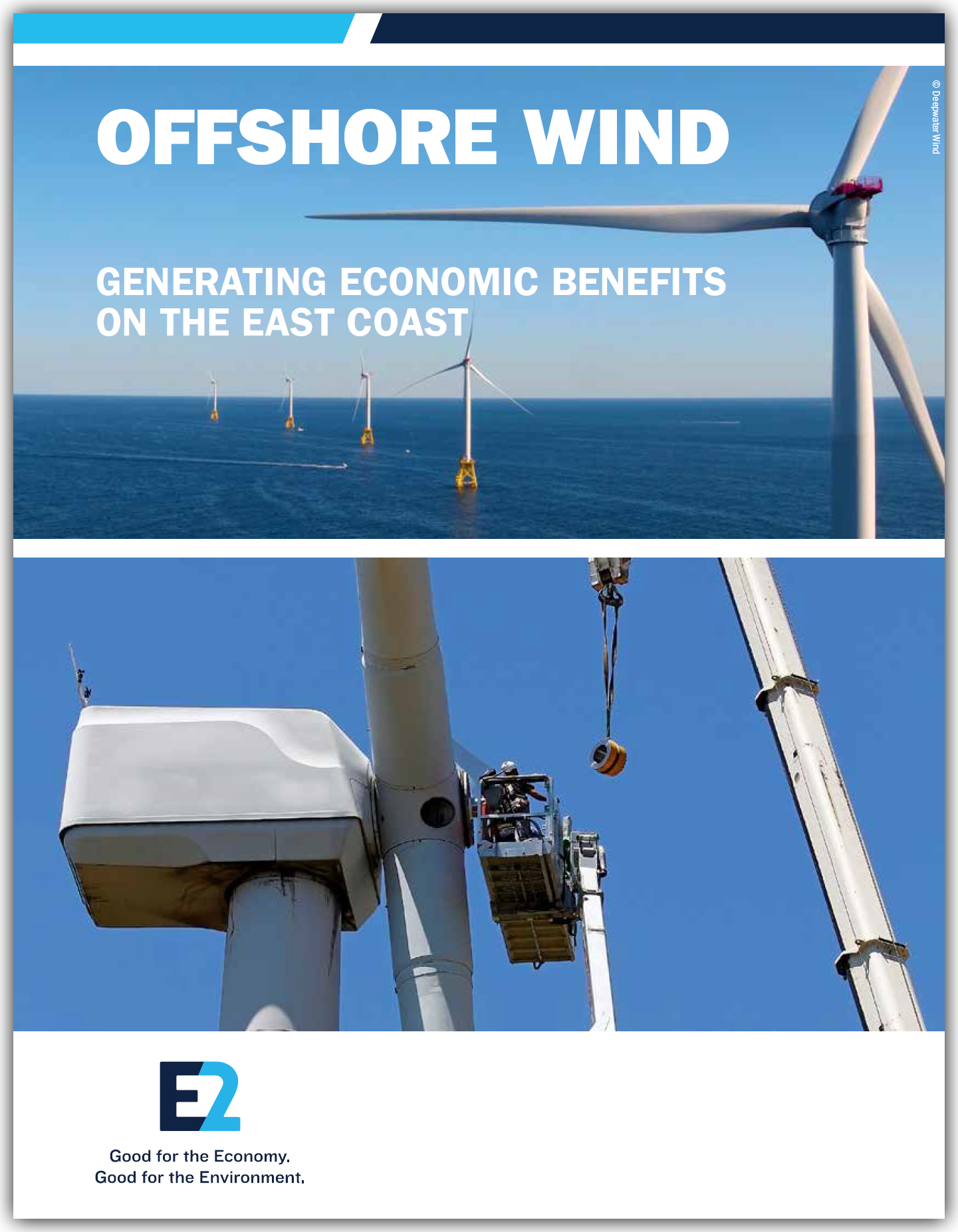
Offshore Wind: Generating Economic Benefits on the East Coast

Date: August 30, 2018

REPORT

The U.S. offshore wind industry is poised for substantial growth, thanks to falling costs and increasing recognition by state and federal policy makers that there are tremendous economic benefits in harnessing clean, renewable energy offshore. BW Research, on behalf of E2, found that if each of the five states below added an average-sized offshore wind energy farm (352 MW) nearly 25,000 construction and operational jobs would be created up and down the eastern seaboard. The Department of Interior is developing lease sales for a strong pipeline of projects in this region—28 in total—which could equal 23,735 MW of new generating capacity, which if all developed would result in tens of thousands of more jobs and added economic benefits for those states. Through its expected growth over the next several years, offshore wind energy has the potential to significantly add to the Gross Regional Product (GRP) and state and federal tax revenues of South and North Carolina, Virginia, New Jersey, and New York.

OFFSHORE WIND ECONOMIC POTENTIAL:

  • If New York, New Jersey, Virginia, North Carolina, and South Carolina added an average-sized offshore wind energy farm (352 MW), nearly 25,000 jobs and $3.6 billion would be added to the states’ economies.
    • South Carolina – 5,647 jobs and $878 million economic benefits
    • North Carolina – 5,522 jobs and $710 million economic benefits
    • Virginia – 4,377 jobs and $641 million economic benefits
    • New Jersey – 4,313 jobs and $702 million economic benefits
    • New York – 4,063 jobs and $737 million economic benefits

OFFSHORE DRILLING’S ECONOMIC RISK

  • A one-month beach and fishing closure due to an oil spill off the coasts of New York, New Jersey, Virginia, North Carolina, and South Carolina would cost over $2.7 billion in GDP and $1.3 billion in lost wages.
    • South Carolina – $117 million in lost wages and $314 million in GDP
    • North Carolina – $57 million in lost wages and $120 million in GDP
    • Virginia – $90 million in lost wages and $175 million in GDP
    • New Jersey – $163 million in lost wages and $307 million in GDP
    • New York – $870 million in lost wages and $1.8 billion in GDP

LOOKING FOR MORE INFO?

If you are looking for additional insight into E2’s Offshore  Wind report, including specific info about a state or to connect with business leaders on the East Coast who support increased offshore wind development and policies that grow clean energy jobs, contact E2 Communications Director Michael Timberlake ([email protected]).

The complete report is available here.


View Report »

District-By-District | 2018 Clean Energy Jobs in California

Date: August 14, 2018

According to an analysis of every California legislative district released by E2 in August 2018, more than 519,000 Californians now work in clean energy industries, and more than $49 billion in public and private clean energy economy investments have been injected into the state. This job growth and investment is driven by California’s climate policies, including its leading Renewables Portfolio Standard and landmark cap-and-trade legislation, which reduces pollution while increasing clean energy production and energy efficiency.

The state’s climate policies also have cut emissions by the equivalent of taking 17.6 million cars off the road and more than two thirds of the $2 billion in clean energy investments stemming from cap-and-trade have gone specifically towards benefiting disadvantaged communities around the state.

For a look at the jobs and economic benefits that have resulted from California’s climate policies for each and every legislative district in the state, please see below:

Clean Jobs | District-By-District

Analysis of Clean Energy’s Economic Benefits Across California Legislative Districts (updated for 2018)

The Dillon Wind Power Project is a 45-megawatt development in Riverside County, Calif. (U.S. Dept. of Energy photo via AWEA Free Use Wind Energy Image Library)

California’s Statewide 2018 Clean Energy Jobs Report
Who Are My Representatives?

District Assembly Member
District 1Brian Dahle
District 2Jim Wood
District 3James Gallagher
District 4Cecilia Aguiar-Curry
District 5Frank Bigelow
District 6Kevin Kiley
District 7Kevin McCarty
District 8Ken Cooley
District 9Jim Cooper
District 10Marc Levine
District 11Jim Frazier
District 12Heath Flora
District 13Susan Talamantes-Eggman
District 14Tim Grayson
District 15Tony Thurmond
District 16Catharine Baker
District 17David Chiu
District 18Rob Bonta
District 19Phil Ting
District 20Bill Quirk
District 21Adam Gray
District 22Kevin Mullin
District 23Jim Patterson
District 24Marc Berman
District 25Kansen Chu
District 26Devon Mathis
District 27Ash Kalra
District 28Evan Low
District 29Mark Stone
District 30Anna Caballero
District 31Joaquin Arambula
District 32Rudy Salas
District 33Jay Obernolte
District 34Vince Fong
District 35Jordan Cunningham
District 36Tom Lackey
District 37Monique Limón
District 38Dante Acosta
District 39Luz Maria Rivas
District 40Marc Steinorth
District Assembly Member
District 41Chris Holden
District 42Chad Mayes
District 43Laura Friedman
District 44Jacqui Irwin
District 45Jesse Gabriel
District 46Adrin Nazarian
District 47Eloise Gómez Reyes
District 48Blanca Rubio
District 49Edwin Chau
District 50Richard Bloom
District 51Wendy Carrillo
District 52Freddie Rodriguez
District 53Miguel Santiago
District 54Sydney Kamlager-Dove
District 55Phillip Chen
District 56Eduardo Garcia
District 57Ian C. Calderon
District 58Cristina Garcia
District 59Reginald Byron Jones-Sawyer, Sr.
District 60Sabrina Cervantes
District 61Jose Medina
District 62Autumn Burke
District 63Anthony Rendon
District 64Mike Gipson
District 65Sharon Quirk-Sirva
District 66Al Muratsuchi
District 67Melissa Melendez
District 68Steven Choi
District 69Tom Daly
District 70Patrick O’Donnell
District 71Randy Voepel
District 72Travis Allen
District 73William Brough
District 74Matthew Harper
District 75Marie Waldron
District 76Rocky Chavez
District 77Brian Maienschein
District 78Todd Gloria
District 79Shirley Weber
District 80Lorena Gonzalez Fletcher

E2 members and staff presented the findings of our clean energy jobs analysis to lawmakers in Sacramento on August 14, 2018. (E2 photo)

View Report »

Taxiing to the electric vehicle transition on the Western Slope

Ryan Kohlman cites data from E2’s “Clean Jobs Colorado” report in an article supporting Gov. Hickenlooper’s executive order ensuring Colorado adopts advanced vehicles standards. “According to the just-released “Clean Jobs Colorado” report from the Rocky Mountain chapter of the national, nonpartisan business group E2 (Environmental Entrepreneurs) and Golden-based Energy Efficiency Business Coalition, more than 57,500 […]

Senate Passes Farm Bill with Incentives for Farmers to Build Soil Health, Sequester Carbon

Louisa Burwood-Taylor cites E2 co-founder and chair, Nicole Lederer, in an article discussing the Senate Agriculture Committee’s passing of its version of the 2018 Farm Bill – one that included provisions aimed at promoting soil health. “This initiative — and to successfully include soil health and carbon provisions in the Senate farm bill — was a […]

Macroeconomic Analysis of Clean Vehicle Scenarios for Colorado

Date: June 12, 2018

REPORT

As the Environmental Protection Agency (EPA) moves to weaken federal greenhouse gas (GHG) regulations for light-duty vehicles, Colorado is moving to counter the negative affects to our air quality, reduced consumer fuel savings and the stifling of our budding auto electrification industry, by adopting Advanced Clean Car Standards. When complete, Colorado will join the 12 states that have adopted the Clean Cars standards—which promise to promote technology improvements, create jobs, ensure that American auto manufacturers remain competitive internationally, and lower emissions.

This study analyzed the macroeconomic impacts of a Clean Vehicles scenario in which Colorado enacts more aggressive GHG emission standards and pursues increased electric vehicle (EV) penetration, relative to a baseline in which GHG standards remain constant at federally set 2020 levels and EV adoption remains low. The study used the IMPLAN economic input-output model to evaluate impacts on employment and gross domestic product (GDP) over the period from 2020 through 2035.

FINDINGS

The analysis found that the pursuit of a cleaner, light-duty passenger vehicle fleet is likely to result in small but positive long-term macroeconomic impacts in Colorado. We estimate average annual increases of approximately $72 million in GDP and 1,700 jobs under the Clean Vehicles scenario. While these impacts are small in the context of the nearly $350 billion total Colorado economy, the net positive impacts of cleaner vehicles are expected to grow over time as fuel savings accumulate and EVs become cheaper. This report’s findings indicate that Colorado can achieve the health and environmental benefits of vehicle emission reductions while continuing to strengthen its economy.

FULL REPORT

Full report can be found at this link or by clicking the cover below.

LOOKING FOR MORE INFO?

If you are looking for additional insight into Macroeconomic Analysis of Clean Vehicle Scenarios for Colorado, contact E2 Rocky Mountains State Advocate Susan Nedell ([email protected]) or Communications Director Michael Timberlake ([email protected]).

View Report »

Mapping Clean Energy: Missouri

Date: June 6, 2018

Missouri’s clean energy economy is clearly thriving.

But where is all this economic activity happening?

That’s exactly what E2 — along with our partners at FracTracker Alliance — attempted to find out with this series of interactive maps showing the location of more than 400 clean energy businesses across the state as well as sites where renewable energy is generated.

The purpose of these maps is to help policymakers, the media, and individuals better understand the scope of Missouri’s clean energy economy – and how much room it has to grow.

Key Takeaways:

  • There are over 400 businessesdisplayed in the map, which includes energy efficiency contractors and renewable energy (solar, wind, and geothermal) installers, covering all 34 state senate districts.
  • Approximately 75 percent of the state has above average potential for solar power
  • There is 702 MW of utility-scale wind and solar capacity currently installed with 458 MW of wind and solar capacity proposed to be built.

We’ve done our best to capture as many businesses as possible but if you know we’ve missed something, please send an email to Micaela Preskill ([email protected]) and we’ll add it to the map. This map isn’t comprehensive; it represents one snapshot in time of an industry to help you understand just how robust it is, and where it still has room to grow.

How to Use the Maps:

We’ve created 3 maps to show different parts of Missouri’s clean energy economy. One map shows clean energy businesses, one shows renewable energy utility-scale infrastructure, and one shows renewable energy potential.

When viewing the map, zoom in to see the intricacies of what’s happening in each part of the state. If you click “Layers” on the black bar at the top of the map you will see a drop-down menu, which you can use to make data appear or disappear on the map.

For more information about what you’re seeing, click directly on the map. A pop-up box will appear to show you specifics. Use the arrows on the top right of the pop-up box to see all the information that applies to that spot on the map. For example, if you click on a pin representing a energy efficiency contractor, you’ll see information about that business. You can also use the arrow to see what legislative districts that business is in.

The Maps

The Clean Energy Business Map shows locations of energy efficiency contractors and solar, wind and geothermal installers.

The Renewable Energy Infrastructure Map shows utility-scale wind and solar generation facilities larger than 1 MW and schools with solar energy generation.

The Renewable Potential Map shows the potential for wind, geothermal and solar power generation.

Other Resources:

Missouri supports 55, 251 clean energy jobs – 2017 Clean Jobs Midwest Report
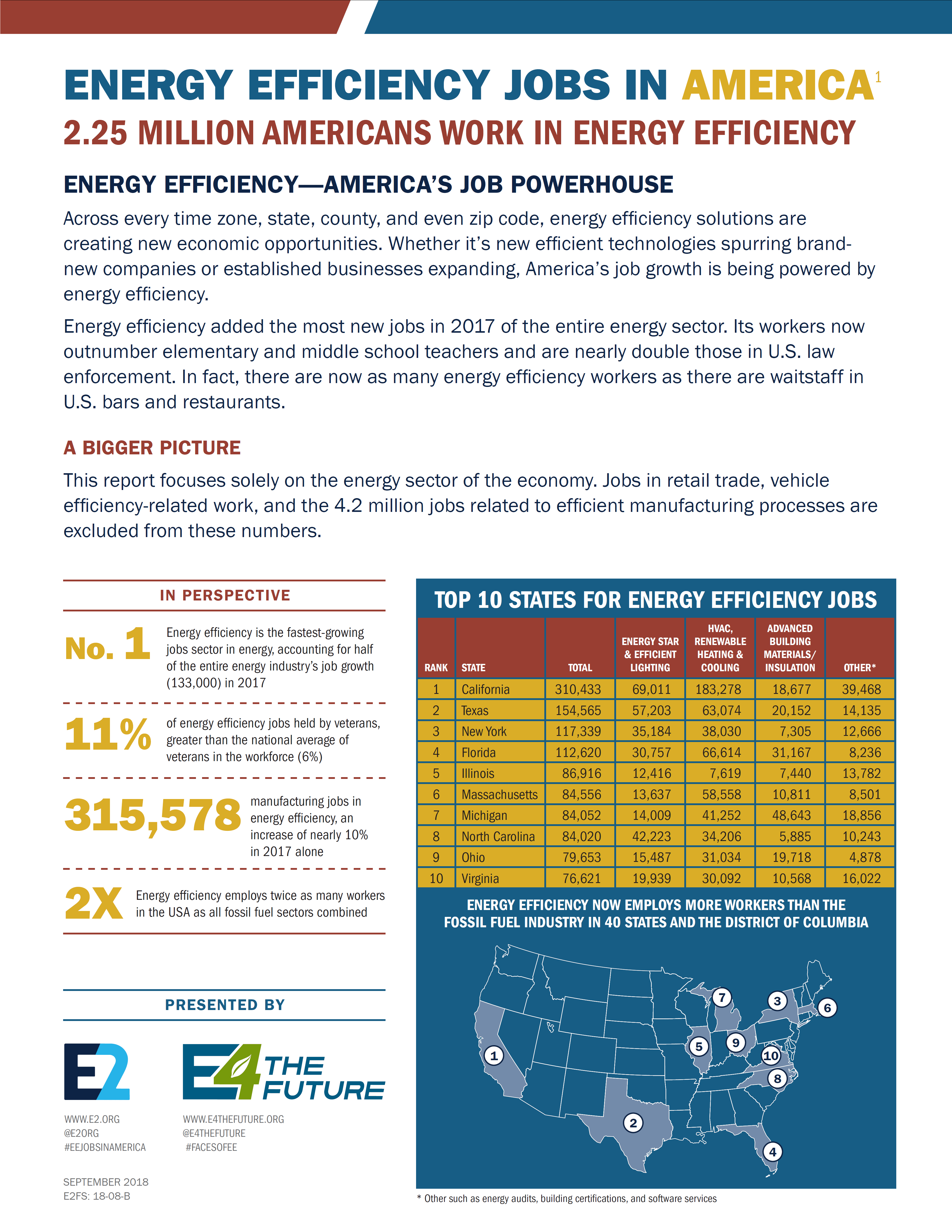
Nearly 3.2 million Americans work in clean energy – Clean Jobs America

View Report »

Oppose DTE’s plan to build a gas plant in St. Clair County

As Detroit Edison (DTE) unveils a plan to build a new, 1,100-megawatt gas plant in St. Clair County, Michigan, E2 members sent this letter to mayors across the state, opposing the plan and urging them to prioritize clean energy and cost-effective energy efficiency programs. 

The New Mobility: The Intersection of Technology, Electrification, and Transportation

Thursday, May 31, 2018 | Doors Open at 6:30 PM, Program at 7:15 PM Patagonia NYC Meatpacking 414 W 14th St, New York, NY 10014 **Drinks and snacks will be provided** Technological advancements are delivering a clean vehicles future that until just recently seemed like a fantasy. Personal electric vehicle adoption is booming, and through […]

New Map Details Ohio’s Clean Energy Economy

Online map shows clean energy sites, energy efficiency contractors, renewable energy installers and electric vehicle charging stations COLUMBUS, OH – A new interactive map shows where renewable energy is being generated across Ohio, the location of public EV charging stations and schools with solar panels, and where nearly 650 Ohio clean energy businesses (solar, wind, energy efficiency, […]

Mapping Clean Energy: Ohio

Date: May 23, 2018

Ohio’s clean energy industry is a significant part of the economy.

But where is all this economic activity happening?

That’s exactly what E2 — along with our partners at FracTracker Alliance — attempted to find out with this interactive map showing the location of clean energy businesses across the state as well as sites where renewable energy is generated.

The purpose of this map is to help policymakers, press and individuals better understand the scope of Ohio’s clean energy economy – and how much room it has to grow.

Strong clean energy standards in Ohio have supported the growth of a healthy industry. There are clean energy businesses in 92 out of Ohio’s 99 state house legislative districts. In particular, energy efficiency contractors dominate the map.

On the map you’ll find:

  • Clean energy businesses: Locations of energy efficiency and solar, wind and geothermal installers.
  • Renewable energy infrastructure: Existing and proposed utility-scale wind, solar and hydroelectric generation facilities larger than 1 MW as well as schools with solar energy generation and public EV fueling stations.
  • State legislative and congressional district boundaries.

We’ve done our best to capture as many businesses as possible but we know we’ve missed some. This map isn’t comprehensive; it represents one snapshot in time of an industry to illustrate how robust it is.

If you know we’ve missed something, please send an email to Micaela Preskill at [email protected] and we’ll add it to the map.

How to Use the Map:

When viewing the map, zoom in to see the intricacies of what’s happening in each part of the state. If you click “Layers” on the black bar at the top of the map you will see a drop-down menu, which you can use to make data appear or disappear on the map.

For more information about what you’re seeing, click directly on the map. A pop-up box will appear to show you specifics. Use the arrows on the top right of the pop-up box to see all the information that applies to that spot on the map. For example, if you click on a pin representing a energy efficiency contractor, you’ll see information about that business. You can also use the arrow to see what legislative districts that business is in.

The Map

Other Resources:

Ohio supports 105, 443 clean energy jobs – 2017 Clean Jobs Midwest Report
Nearly 3.2 million Americans work in clean energy – Clean Jobs America

View Report »

Clean Jobs America 2018

Date: May 16, 2018

POWERING JOBS GROWTH ACROSS AMERICA

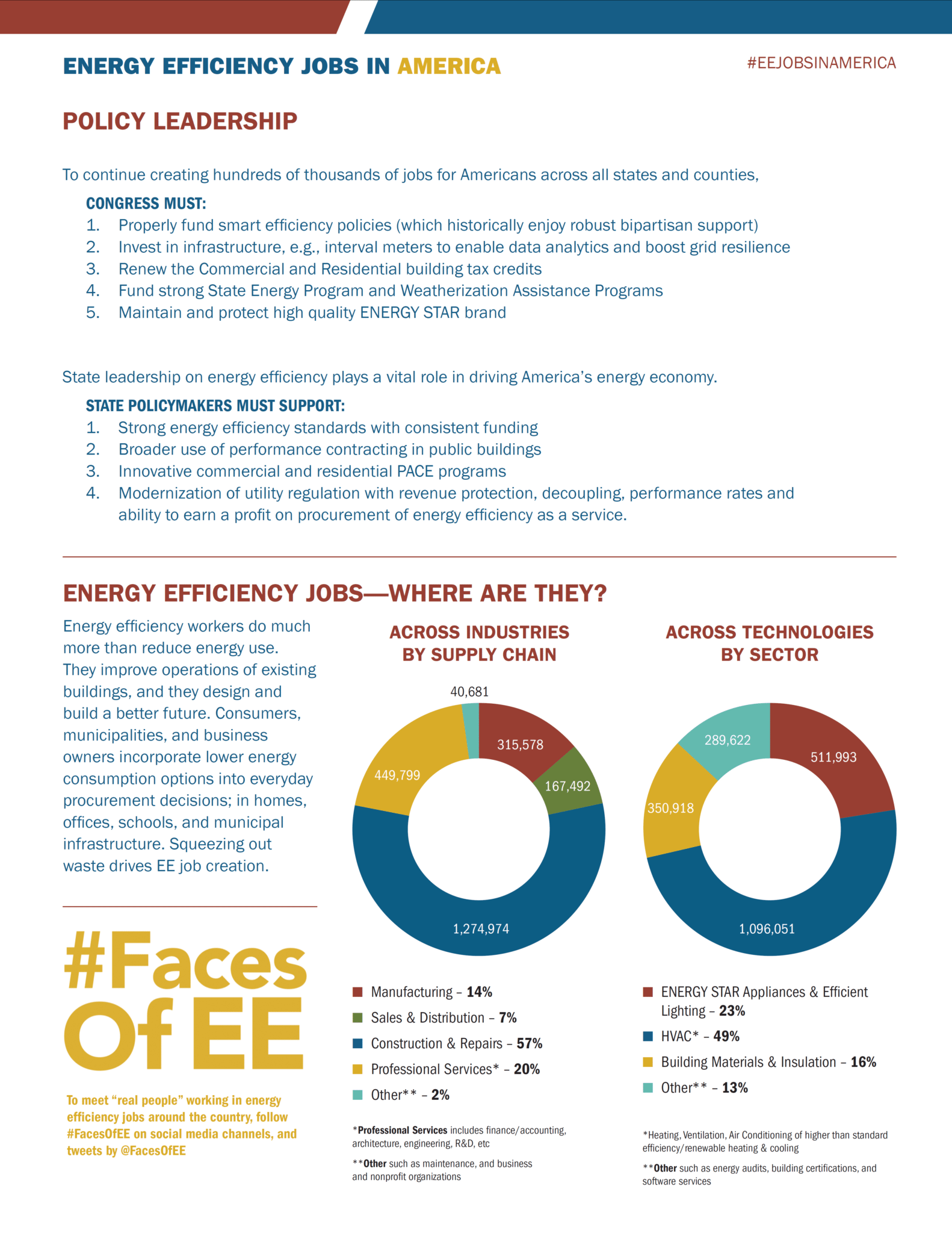
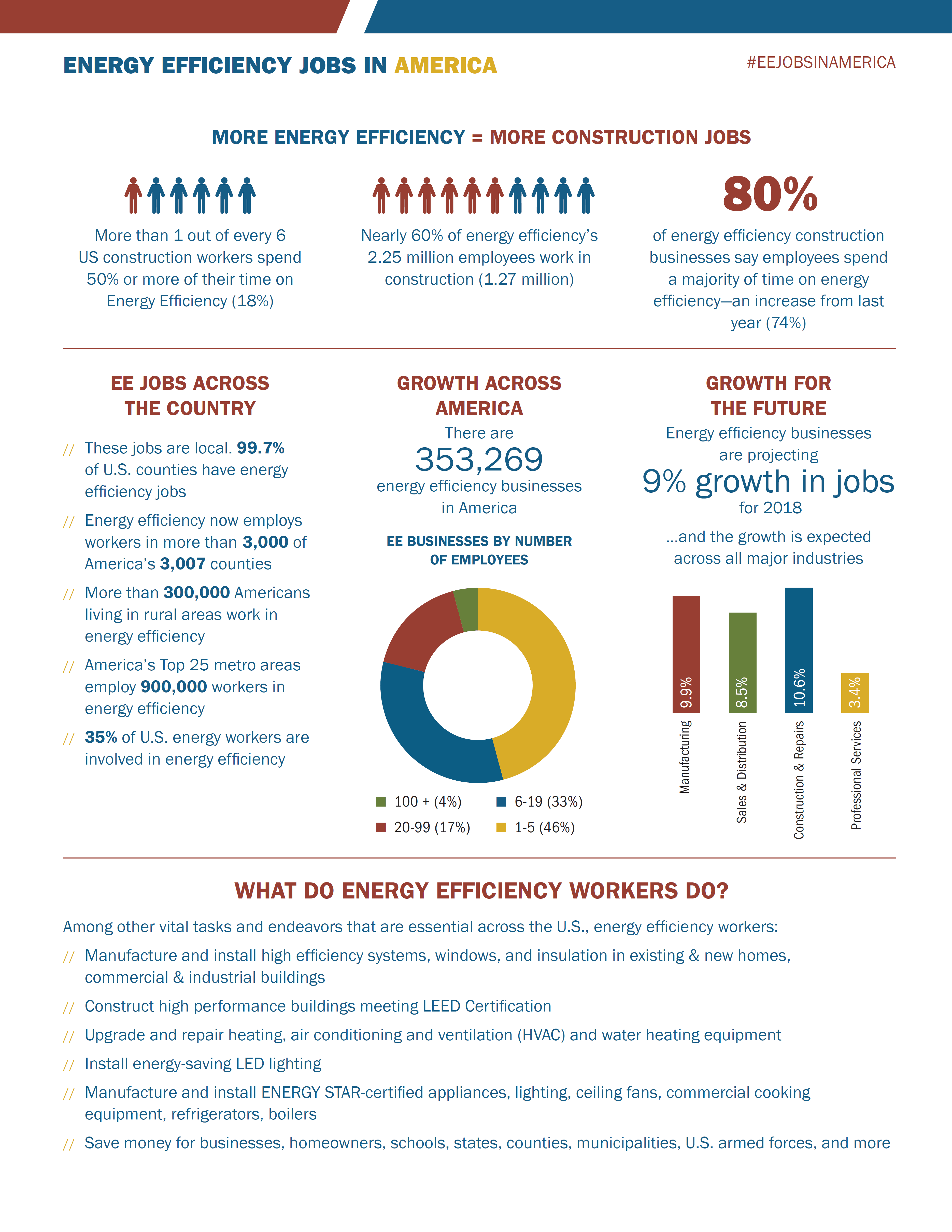
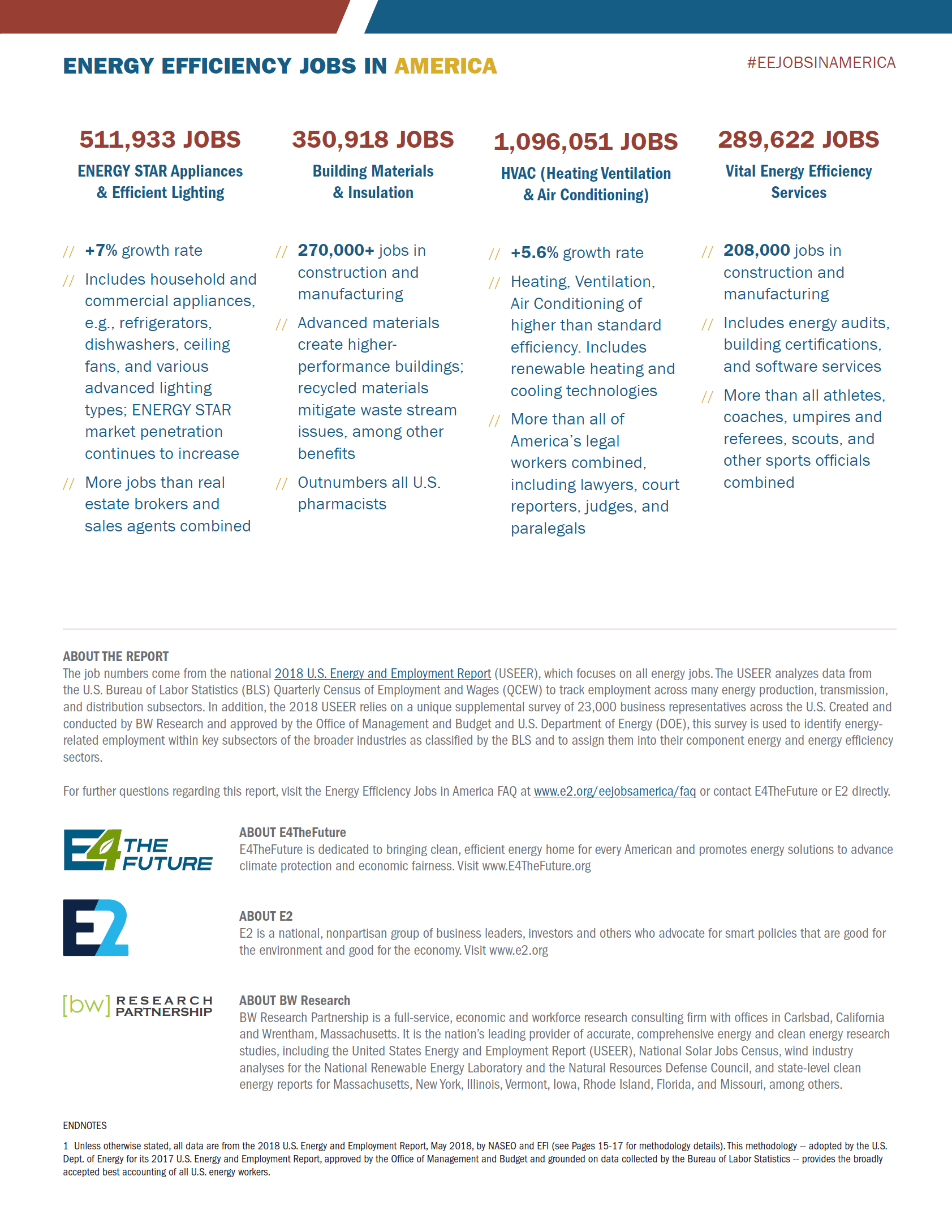
Clean energy is powering job growth in America. Clean jobs count: Nearly 3.2 million Americans now go to work each and every day in solar, wind, energy efficiency, clean vehicles and other clean energy jobs.

HIGHLIGHTS

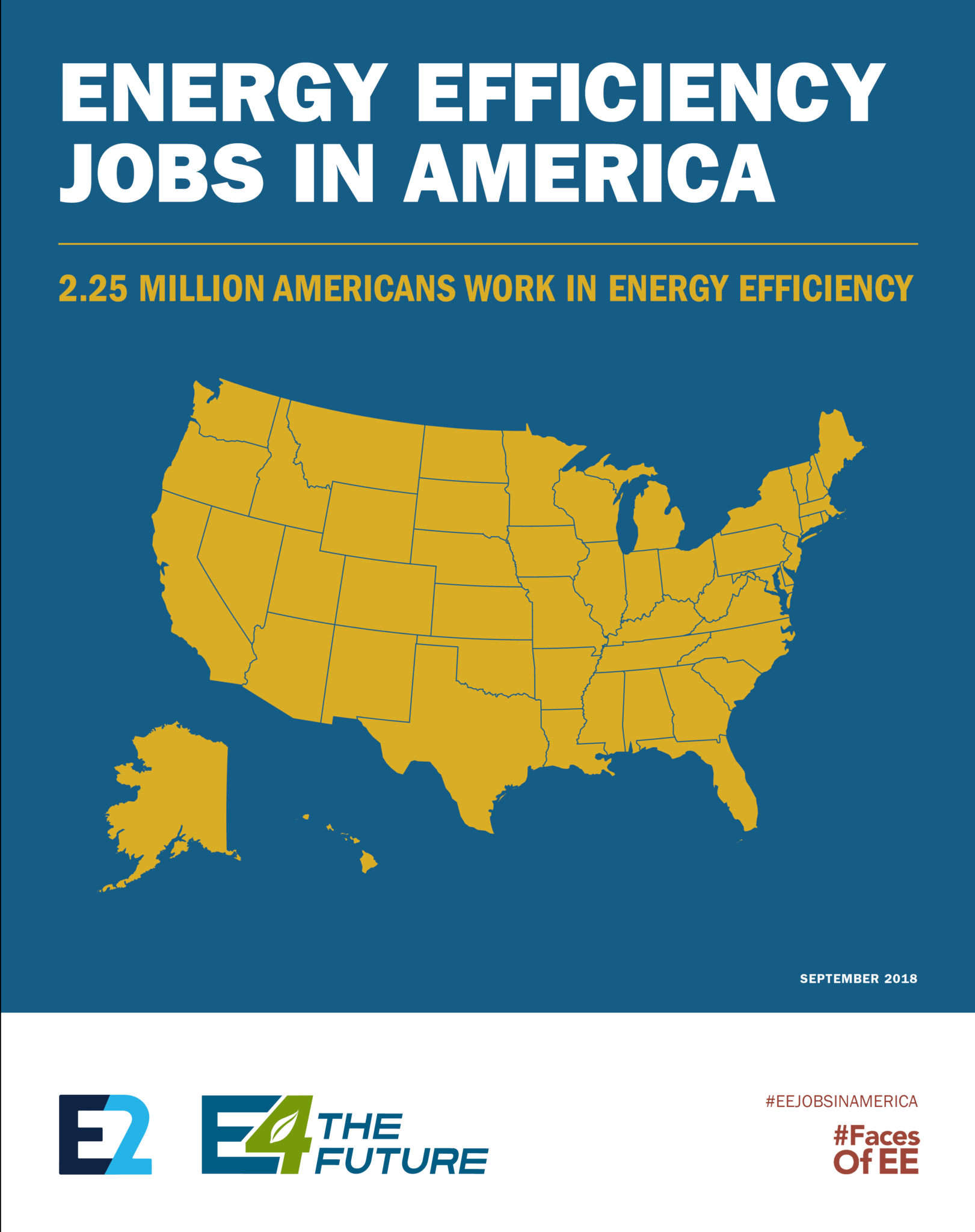
  • Energy Efficiency Jobs – 2,250,000
  • Solar Jobs – 349,000
  • Clean Vehicle Jobs – 220,000
  • Wind Jobs – 107,000
  • Energy Storage Jobs – 91,000
  • TOTAL US Clean Energy Jobs – 3,177,000

LOOKING FOR MORE INFO?

If you are looking for additional insight into E2’s Clean Jobs America or our other Clean Jobs America reports, visit e2.org/reports or see Clean Jobs Count for a full interactive jobs breakdown of every U.S. state and clean energy industry. You can also contact E2 Communications Director Michael Timberlake ([email protected]). An FAQ is also available here to answer any questions.

DOWNLOAD

The complete report is available for download here.

View Report »
Sign Up for Email Updates


"*" indicates required fields

This field is for validation purposes and should be left unchanged.

Our Latest Press Releases


Releases

STATEMENT: Federal Rollback of Auto Fuel Efficiency Standards Will Increase Costs for Consumers, Businesses

The National Highway Traffic Safety Administration (NHTSA) is expected to announce the Administration’s intent to weaken federal Corporate Average Fuel Economy (CAFE) standards for vehicles. Such a dramatic shift in policy would halt five decades of progres...


Releases

Companies Cancel $4.4 Billion in Clean Energy Projects; $28 Billion, 30K Jobs Lost in 2025

WASHINGTON –Businesses canceled, closed, and scaled back more than $4.4 billion worth of large-scale factories and clean energy projects from late-September through October, bringing the total cost of projects cancelled in the private-sector to over $28.7 b...


Releases

REPORT: Clean energy grew 5X faster than rest of Pennsylvania economy, added 3K jobs in 2024

HARRISBURG (Nov. 20, 2025) – Clean energy jobs in Pennsylvania grew more than five times faster than the rest of the state's economy in 2024, raising the total number of clean energy workers in the state to over 104,000, according to the Clean Jobs Pennsylv...


Donate Today