Solar energy is at a turning point in Massachusetts. While its benefits and popularity are undeniable, continued growth is in jeopardy. Solar development is completely stalled in half of Massachusetts and could grind to a halt throughout the state without supportive policies.
A comprehensive analysis of clean energy jobs in New York
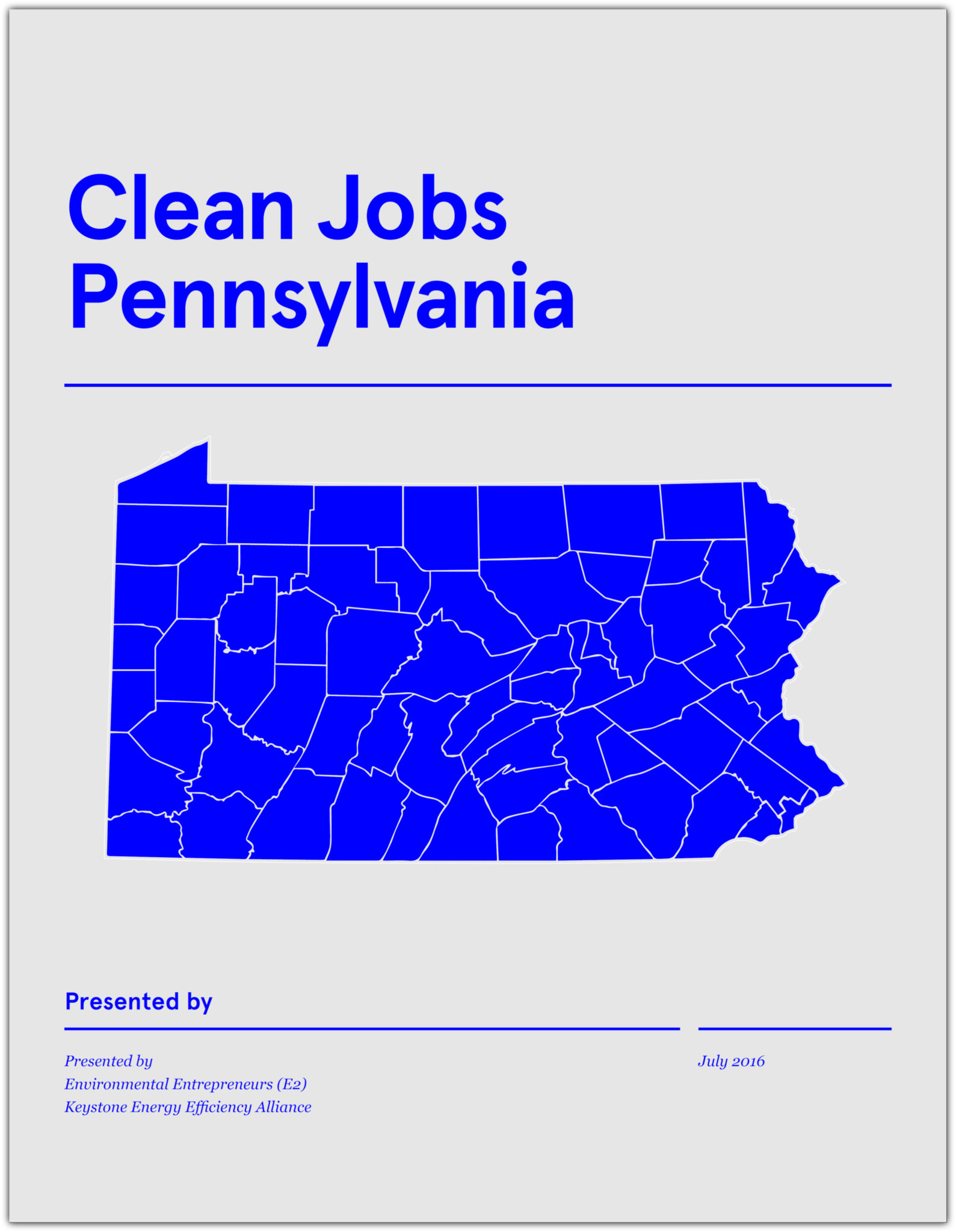
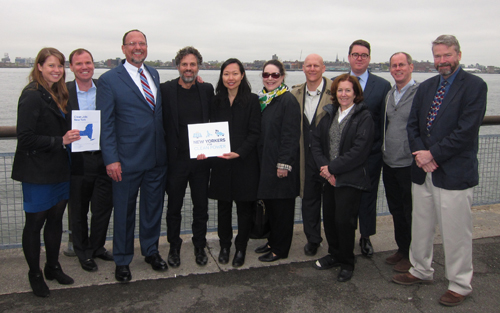
E2 and our partners recently released Clean Jobs New York, a comprehensive report showing that more than 85,000 people work in the clean energy sector in New York at more than 7,500 business establishments.
The report is available here and you can also search for clean energy jobs in your home county with this dynamic, searchable dashboard.
The press release for the report is here,the press release for the New Yorkers for Clean Power campaign is available here, and press coverage of the report is available here.
By looking at the size and scope of the state’s clean energy economy, Clean Jobs New York helps stakeholders better understand how clean energy is creating jobs — and what policies are needed now to support further gains in the future.
A few of the report’s key findings include:
Clean energy employs 85,197 people at 7,500 business establishments statewide. Energy efficiency is the largest industry in the sector, employing four out of five clean energy workers in New York.
Clean energy businesses anticipate growing more than 6 percent this year. That’s more than double the growth rate of the entire U.S. economy in 2015.
Clean energy knows no politics. Clean energy jobs are growing in legislative and congressional districts across the state. With the right policies from Albany and Washington, D.C., even more jobs can be created all across New York.
A new, first-of-its-kind guidebook by Environmental Entrepreneurs (E2) and the Natural Resources Defense Council (NRDC) offers practical, how-to advice for young people seeking careers in clean energy.
More than 2.5 million Americans work in clean energy nationwide, according to a comprehensive analysis of U.S. clean energy jobs. Energy efficiency, renewable energy and advanced vehicles were the clean energy industries with the most workers.
Clean Jobs Midwest shows 569,000 clean energy jobs across the 12-state Midwestern region. The report’s website is searchable by county, congressional district and state legislative district.
2015 was a big year for clean energy policy, with the finalization of the federal Clean Power Plan, which sets the first-ever limits on carbon pollution from power plants; an international agreement at the UN climate talks near Paris; extension of key federal tax incentives for wind and solar electricity; and major investments in clean energy by business leaders.
New analysis from the Cleantech Group and E2 shows California’s nation-leading clean energy policies, especially AB32, have helped stimulate big investments in key cleantech markets, driven job creation, and resulted in energy savings to businesses and customers. Other states are following suit.
More than 3.3 million Americans now work in clean energy. That’s more Americans than work in agriculture, banking, real estate – and double the number of workers in fossil fuel. Through our clean energy employment research and the inspiring stories of our members, E2 makes sure our lawmakers and the public understand the impact that […]
In the third quarter of 2015, 34 clean energy and clean transportation projects were announced across 22 states. Combined, these projects are expected to create just shy of 10,000 jobs, with solar once again the top sector. Utah, California, and Colorado led the nation in job announcements, followed by Texas, Arizona, Georgia, Maine, Nebraska, Mississippi, and North Dakota. Since E2 began tracking jobs in 2012, more than 250,000 clean energy and clean transportation jobs have been announced.
In the second quarter of 2015, nearly 40 clean energy and clean transportation projects were announced across 22 states. Combined, these projects are expected to create nearly 10,500 jobs.
Texas, Nevada, and California led the nation in announced jobs, followed by Utah, North Carolina, Kansas, Arkansas, Colorado, Virginia, and Nebraska. In Texas, solar and wind installation projects drove the state’s top performance.
Two new wind farms will cumulatively produce 402 MW of power from wind turbines in the Lone Star State, while Spanish wind manufacturer GRI Renewable Industries will create 300 jobs with a new wind turbine manufacturing plant in Amarillo. Three solar farms will add another 320 MW of Texas power and could create up to 1,364 jobs in Windthorst, Floyd, Andrews, and Pecos counties.
California’s 40-year commitment to energy efficiency has saved Californians $90 billion on their utility bills, created hundreds of thousands of efficiency jobs, and will have avoided the pollution from 41 power plants by the end of the next decade, according to a report published by NRDC and E2. However, the report cautioned that a major efficiency ramp-up is necessary to meet the state’s long-term climate and energy goals.
As Tennessee’s clean energy economy expands, the industry will contribute to statewide economic vitality. With a diverse renewable energy portfolio and robust employment across all value-chain activities, employers are optimistic about future growth. Increased support for local suppliers and vendors will encourage successful industry expansion, spur local job creation, and further bolster the state’s economy.
Tennessee could capitalize on its market diversity by tapping into the region’s renewable potential and committing to energy efficiency as a resource. The National Renewable Energy Laboratory (NREL) found that Tennessee’s technical solar potential for utility-scale projects is 1,296 GW and 16 GW for rooftop photovoltaics. With an additional 54 GW potential from geothermal systems and 1 GW from hydropower, the state’s clean energy cluster will benefit by developing these resources.49 Other states provide solid examples of how effective energy efficiency policies focused on consumer incentives, rebates and proactive utility programs can create jobs across traditional industries, especially within the building trades.50 States that are leaders in energy efficiency have illustrated that supportive clean energy policies are highly correlated to economic impacts, particularly regarding construction-related employment. If Tennessee could emulate these policies, the resulting employment impact could exceed 10,000 new clean energy jobs across the state.
Tennessee is already home to more than 2,600 clean energy employers and nearly 45,000 workers. Its companies supply the market with electric cars, energy efficient materials, renewable energy and advanced building controls. Clean energy employers are adding jobs faster than the overall state economy and project continued growth in the coming year. To sustain this growth, many firms report the need for greater consumer incentives, more supportive policies on renewable energy and more innovative financing mechanisms to expand the state’s clean energy market.
Federal judge blocks illegal regulatory attacks on clean energy by the Trump administration, providing a preliminary victory for wind and solar energy -- the quickest-to-deploy power available that keeps electricity prices affordable for consumers and compa...
The E2 & 1 Hotels the fellowship program is designed to help early career environmentally-minded entrepreneurs and community leaders to create and implement unique projects at the intersection of the economy and environment. This year’s projects span a wide...
The EPA officially revoked the endangerment finding for greenhouse gas (GHG) emissions and eliminated clean vehicle standards in a blow to both our economy and our environment.
February 12 2026
Donate Today
Make a donation to help E2 advance policies that are good for the economy and good for the environment. Your donation is 100% tax-deductible from our partner, the NRDC.
Please contact E2 Membership Director Ying Li at [email protected] or 212-727-4437 for stock and wire transfer instructions.
For stocks, alert us to the transfer and provide the name of the stock and the number of shares being donated. This will help us track your donation internally and enable NRDC to provide an accurate gift receipt in a timely fashion.
Donations to E2 go directly to NRDC, a 501(c)3, and are fully tax-deductible (Federal Tax ID: 13-2654926). E2 collects no funds. NRDC provides full-time staffing dedicated to E2, as well as administrative, communications, legislative and analyst/policy support for the work of E2.
By Check
Make personal, Foundation or Donor Advised Fund checks payable to NRDC (indicate your donation is for E2 Membership to expedite processing) and send to:
Natural Resources Defense Council
Attn: Gift Processing
40 West 20th Street, 11th floor
New York, NY 10011