Across the country, state legislatures are reconvening.
With the Trump administration continuing to tear apart federal climate and clean energy standards, it’s already clear that in 2020, it’s up to states and cities to once again lead America on policies that are good for our environment and our economy.
The good news is that many legislators and governors are seizing the challenge of taking action on climate change — and seizing the economic opportunities that come with it.
On either coast, lawmakers in 2020 will consider sweeping changes that will get more electric cars — and heavy duty trucks — rolling on our highways. Midwest lawmakers will decide on one of the biggest clean energy jobs bills in the country, as well as policies to finally clean up outdated and dangerous water systems that are essential to the region’s economy. In the Mountain West, Colorado and Nevada lawmakers this year will consider policies that build on monumental clean economy laws they passed in 2019 — laws that are already creating jobs and driving new investments in solar, wind, energy efficiency and clean vehicles.
Here’s a sampling of key issues to watch in the months ahead:
THE WEST
California policymakers are working on Advanced Clean Truck (ACT) standards that would create new markets for electric and zero- emission medium- and heavy-duty trucks. Legislators also are expected consider bills to reduce plastics and create new opportunities for recycling companies. They also could consider new programs to advance soil health and carbon sequestration on California farms that could help drive new growth and investment in the ag-tech sector.
In the Pacific Northwest, Oregon lawmakers will once again debate an economy-wide carbon cap-and-invest program that has widespread support but faces political headwinds. Washington state lawmakers are expected to consider a new clean fuels standard that would reduce the carbon intensity of transportation fuels by 20 percent by 2035.
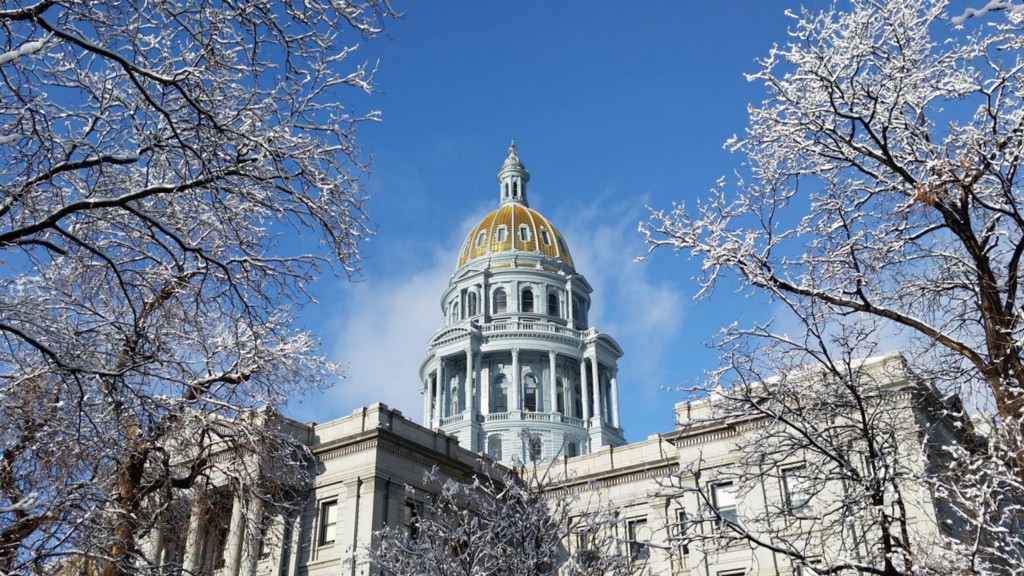
Colorado lawmakers this year are expected to consider programs to reduce carbon emissions from buildings through electrification and energy efficiency, continuing the Centennial State’s leadership on clean energy in recent years. Colorado also will consider several new programs to expand electric vehicle adoption, and in Nevada, there’s a push to adopt new clean car standards.
THE MIDWEST
In Illinois, the country will be watching for lawmakers to finally pass the Clean Energy Jobs Act (CEJA), which will put the state on track to get 100 percent of its energy from renewable sources by 2050; put more electric vehicles on the road and expand energy efficiency programs. CEJA will create an estimated $30 billion in investment in clean energy and thousands of good-paying jobs.
In Michigan, legislators and Gov. Gretchen Whitmer will consider policies aimed at cleaning up Michigan’s aging water infrastructure, which helped result in the Flint disaster and is threatening businesses ranging from craft breweries to tourism. Fixing Michigan’s bad pipes could create an estimated 90,000 new jobs and generate $8.8 billion in wages over 20 years, according to a recent E2 study.
THE EAST
In New York, New England and the Mid-Atlantic, policymakers in a dozen states and the District of Columbia that are part of the Transportation & Climate Initiative are expected to refine a regional plan to reduce carbon emissions from the region’s transportation network by increasing EVs, adding public transit and setting the groundwork for more sustainable communities. The TCI has the ability to dramatically improve air and water quality while also reducing congestion and creating new markets and jobs for electric vehicle and clean fuels companies. In New York, New England and other parts of the East Coast, policymakers are also expected to continue to advance and expand offshore wind development while simultaneously protecting their beaches and coastal economies from offshore drilling.
In Pennsylvania, lawmakers are expected to consider long-overdue legislation to increase the state’s renewable energy standard from 8 percent to 18 percent. They’re also expected to take up legislation to expand EV charging stations and other infrastructure as part of Gov. Tom Wolf’s overarching climate goals and the state’s involvement in the Transportation & Climate Initiative.
North Carolina policymakers will be tasked with implementing Gov. Roy Cooper’s sweeping climate package (Executive Order 80), which includes a Clean Energy Plan that will expand renewable energy, reduce carbon emissions and put more electric vehicles on the road. North Carolina is still grappling with more than $17 billion in losses from back to back hurricanes and floods. It’s also America’s №2 state for solar. As such, North Carolina knows well economic costs of climate change and the economic benefits of climate action — something it and other states will continue to learn in 2020.
As State Legislatures Reconvene, Here’s What To Watch on Climate, Clean Energy was originally published in e2org on Medium.