
“You did this,” the president told me as I thanked him on behalf of E2 for creating and signing into law the most important climate and clean energy policy in history.
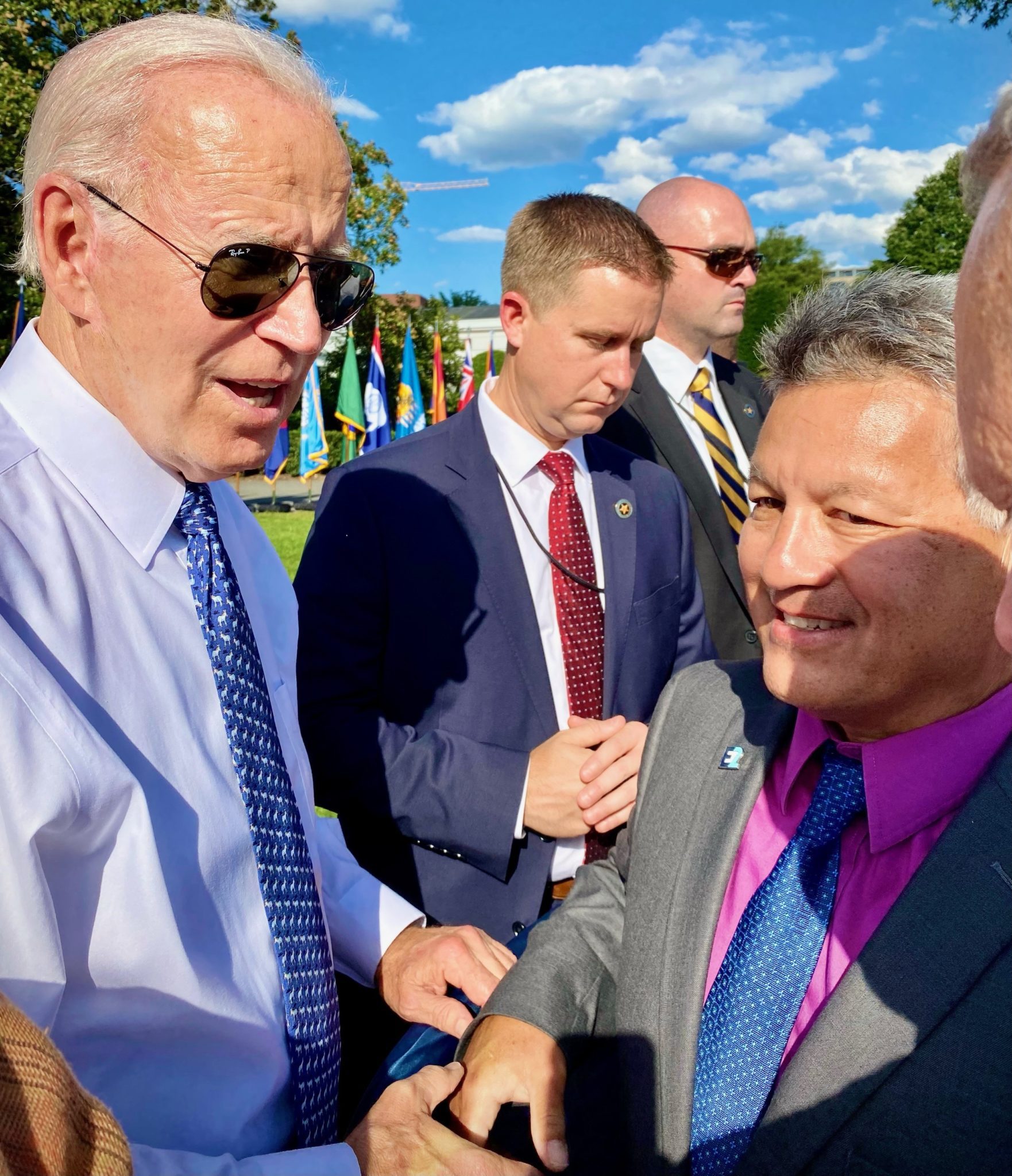 “No, I really mean it,” President Biden said, still squeezing my hand in a firm shake after a long day of hand shaking. “This only happened because you all kept pushing and pushing and pushing.”
“You never gave up,” he said.
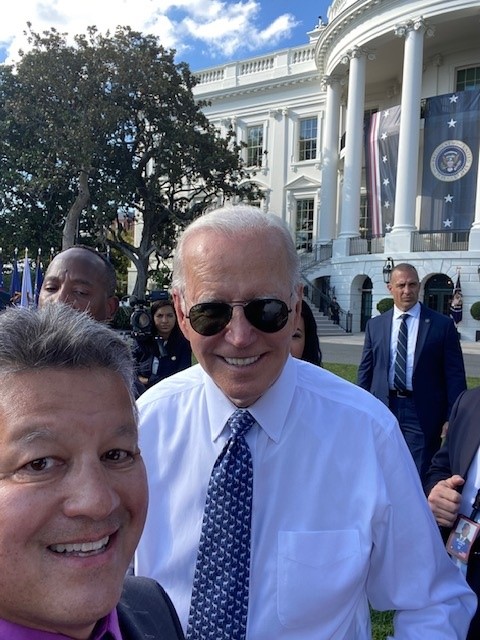
I was fortunate to be at the White House — along with hundreds of fellow advocates, friends and business and climate champions — for the celebration of the Inflation Reduction Act, the legislation we’d all been pushing and pushing for more than a year.
The president was right — especially when he said, “you all.”
One glance across the invited crowd gathered at the White House showed clearly how it took Americans from all across society — business leaders, workers, environmental, health and social justice advocates, labor unions, tribal communities — all of us, pushing and pushing and pushing for this truly transformative legislation could quite literally help save the planet.
Through $370 billion in investments and tax credits for clean energy, electric vehicles and other climate solutions, the legislation is expected to create millions of jobs, reduce consumer energy costs, transform our electricity and transportation systems and make America more competitive with the rest of the world. In doing so it will also reduce carbon emissions by an estimated 40 percent, create millions of jobs and reduce by nearly $2 trillion the costs every American is paying for natural disasters, health and productivity costs.
The day before I was in Washington, D.C., I was in Washington state, where wildfires were once again threatening homes, ravaging our forests and making the air quality as far west as Seattle some of the worst in the world. At the Cascadia Innovation Corridor conference, I joined former Washington Gov. Christine Gregoire, Bill Gates and Microsoft CEO Brad Smith and other business, government and environmental leaders who together building a cleaner, better economy in the Pacific Northwest.
In Washington state like in Washington D.C., the key is that they all — business, government, activists and others — keep pushing and finding ways to work together to make the world a better place.
We’re already seeing what smart policies forged together can do.
 It’s been just a month since President Biden signed the Inflation Reduction Act. But already, companies all over the country are announcing major new investments, hiring hundreds of new workers and expanding to meet the new demand for clean energy, electric vehicles and the infrastructure behind them.
First Solar, the largest U.S. solar panel maker, said the legislation is the reason it’s building a new $1 billion factory and investing $185 million more to upgrade its factories in Ohio.
In North Carolina, Toyota just announced a new $2.5 billion new battery plant because it now has more market visibility thanks to the Inflation Reduction Act. Other EV and battery makers also are building new factories in Kentucky, Georgia, Texas, Tennessee and elsewhere.
In recent weeks, I’ve talked to CEOs from companies like Buglet Solar and SCOUT Clean Energy in Colorado, solar racking company Panelclaw in Massachusetts and SOLVenergy in California. They all tell me the same thing: Business is booming, and it’s because of the Inflation Reduction Act. Earlier this week, more than 150 business leaders from across the country signed on to this E2 letter thanking President Biden and Congress for the win for our economy and our planet.
Unfortunately, missing from the celebration at the White House was an entire political party — Republicans. Not a single Republican member of Congress voted for the Inflation Reduction Act, even though Republican states are hurting the worst from the economic costs of climate disasters, and are benefitting as much — if not more — from the investments and jobs in clean energy and clean transportation that the policy is already delivering.
 There’s nothing political or partisan about climate change or clean energy. Two years ago, E2’s research on clean energy jobs shows, there were nearly as many clean energy jobs in Republican states as there are in Democratic states. Republican states have benefitted even more since then if the recent announcements in the Southeast, in Texas and elsewhere are any indication.
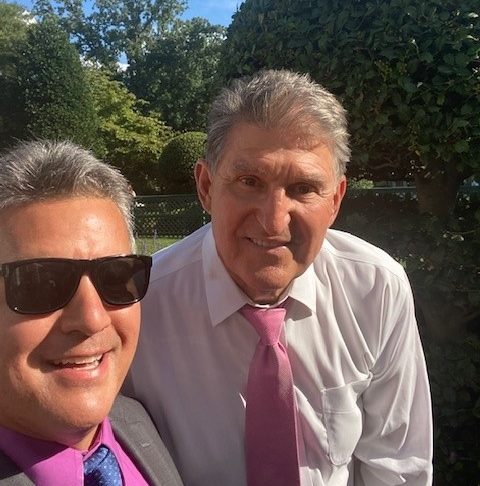
One person who was at the White House ceremony was Sen. Joe Manchin of West Virginia, who was the key vote in the tortured negotiations over the Inflation Reduction Act. On the way out of the celebration, I stopped to thank him for his decision to support the bill. Without him, I told Sen. Manchin, there would be no legislation, no investments, no celebration.
“It takes a whole team,” Manchin said to me.
“It takes a whole team.”
On Climate Action, We All Did This was originally published in e2org on Medium.