By William Barber III & Ethan Blumenthal
As the state’s economy looks to recover from COVID-19, the clean energy industry provides an opportunity to both hasten our recovery and address other urgent challenges North Carolinians face, including racial inequity, job growth, job quality and climate change.
That’s a lot to ask of a single industry. Fortunately, two years ago the state released its Clean Energy Plan, which shows how to maximize clean energy’s myriad benefits as we build a low-carbon, high-growth, and more equitable future.
The Clean Energy Plan makes the important connection between lack of access to clean energy and poverty. It highlights that in our state, 1.4 million people are sent energy bills every month they can’t afford. Structural issues with houses and apartments accessible to low-income people often make it difficult to incorporate solar arrays or energy efficiency measures, both of which also have high upfront costs.
Racial disparities exacerbate this energy poverty. Energy-burdened households are more likely to earn less than $20,000 annually and be of African-American or Latino descent. When historically marginalized people are unable to participate even in small clean energy projects, access to good job opportunities narrows and the industry suffers.
According to the Clean Jobs North Carolina report by the national, nonpartisan business group E2, at the end of 2019 more than 113,000 North Carolinians worked in clean energy. However, E2’s just-released “Clean Jobs, Better Jobs” report shows obvious inequities across the nation when it comes to who actually reaps personal financial rewards from these jobs.
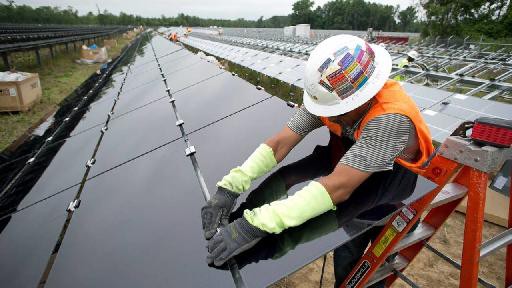
For example, about 80 percent of solar installers nationally have healthcare, a relatively high percentage compared to other industries. While the percentage of white solar installers (55 percent) and Latino solar installers (32 percent) are closer to their representation in the overall U.S. population, only about 6 percent of solar installers are Black, compared to roughly 13 percent of all Americans.
Similarly, workers who weld, cut, solder, and braze metal to help build clean energy infrastructure like wind turbines and transmission lines are generally better paid than other clean energy workers, and they enjoy some of the highest rates of benefits. Yet according to E2 data, two-thirds of these workers are white, one in five are Latino — and only 8 percent are Black.
Why is this issue urgent? Because clean energy has proven it can lead North Carolina through an economic shock. With Covid-19, it’s poised to do so again — but only if we ensure that all people, especially those historically marginalized, have equitable access to the benefits of a burgeoning clean energy industry.
North Carolina enacted Senate Bill 3 in the summer of 2007, boosting state tax incentives for renewable energy and instituting a Renewable Portfolio Standard. Now, North Carolina is by any metric one of the South’s leading solar states. Yet in the wake of the Great Recession, as capital flowed into North Carolina’s clean energy industry, its benefits — including solar installation jobs with national median wages of $24.50 per hour — were disproportionately enjoyed by white North Carolinians.
In the Covid-19 recovery, that’s unacceptable. All North Carolinians — including those historically marginalized — must have equitable access to clean energy’s economic benefits.
This is personal. For generations our families have been preachers, business leaders, independent farmers and philanthropists in North Carolina. Over that time, this state has continually reinvented itself, from textiles and tobacco to clean tech, healthcare, and finance.
Today, at the beginning of our own careers, we know this state can be a national leader in equitable clean energy development and deployment. Alongside friends, neighbors, and colleagues, we’re eager to do our part to help build a cleaner, more just, and more prosperous state — and we invite you to join us.
William Barber III of Durham is manager of strategic partnerships at the Climate Reality Project and founder and CEO of the Rural Beacon Initiative, LLC . Ethan Blumenthal of Charlotte is co-founder and CEO of Good Solar, a solar development organization.
Originally published at https://www.newsobserver.com.
Clean energy can also power racial equity in North Carolina was originally published in e2org on Medium.