
Editor’s Note: This case study first appeared in E2’s “Colorado’s Clean Energy Future” report, released in October 2016.
Buildings consume 70 percent of our electricity, and they are responsible for nearly half of all greenhouse gas emissions. iUnit Technologies LLC’s mission is to be part of the solution to reduce those emissions. The Denver-based company uses cutting-edge technology and sustainable building practices to create sustainable communities.
A lifelong entrepreneur, Brice Leconte founded iUnit as a result of his passions for real estate development, sustainability and technology. Leconte is involved in every aspect of iUnit, from land acquisition to conceptual design, technology integration, sustainability integration and daily construction and management oversight. Leconte is an Entrepreneur in Residence at the University of Maryland as well as an advisor and mentor at Georgetown University.
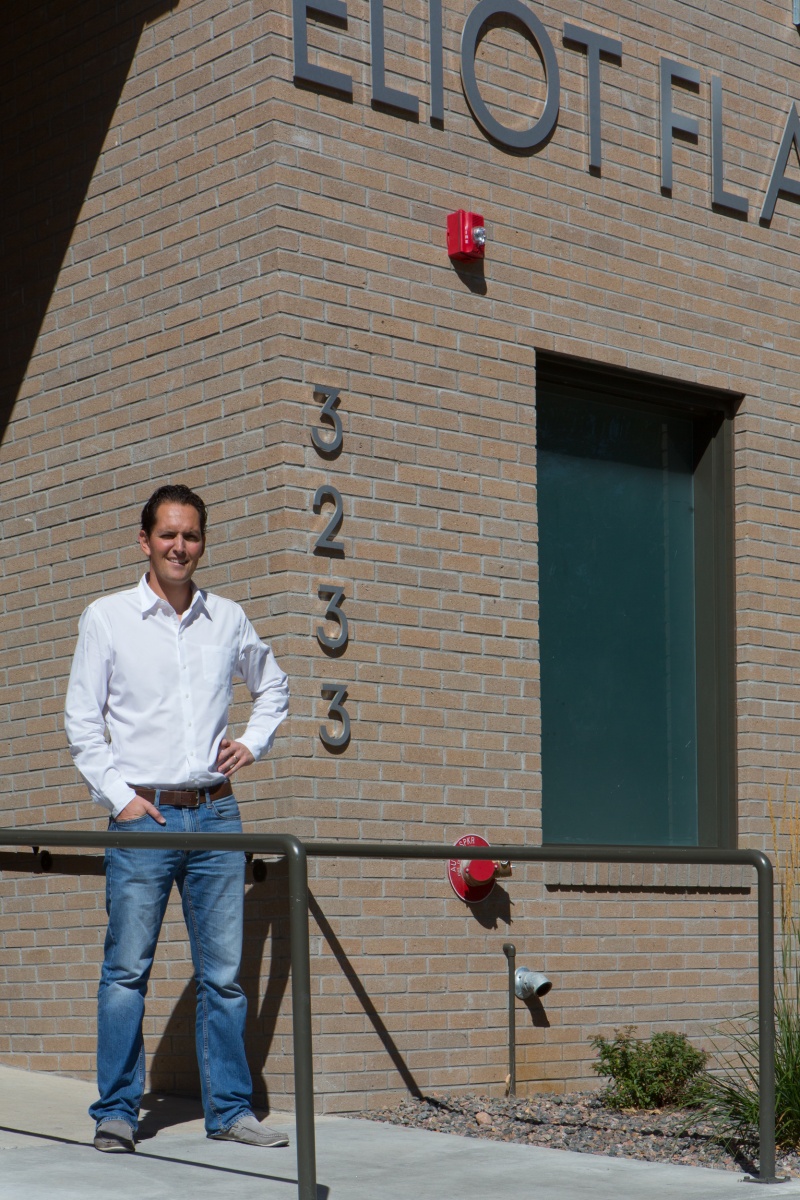
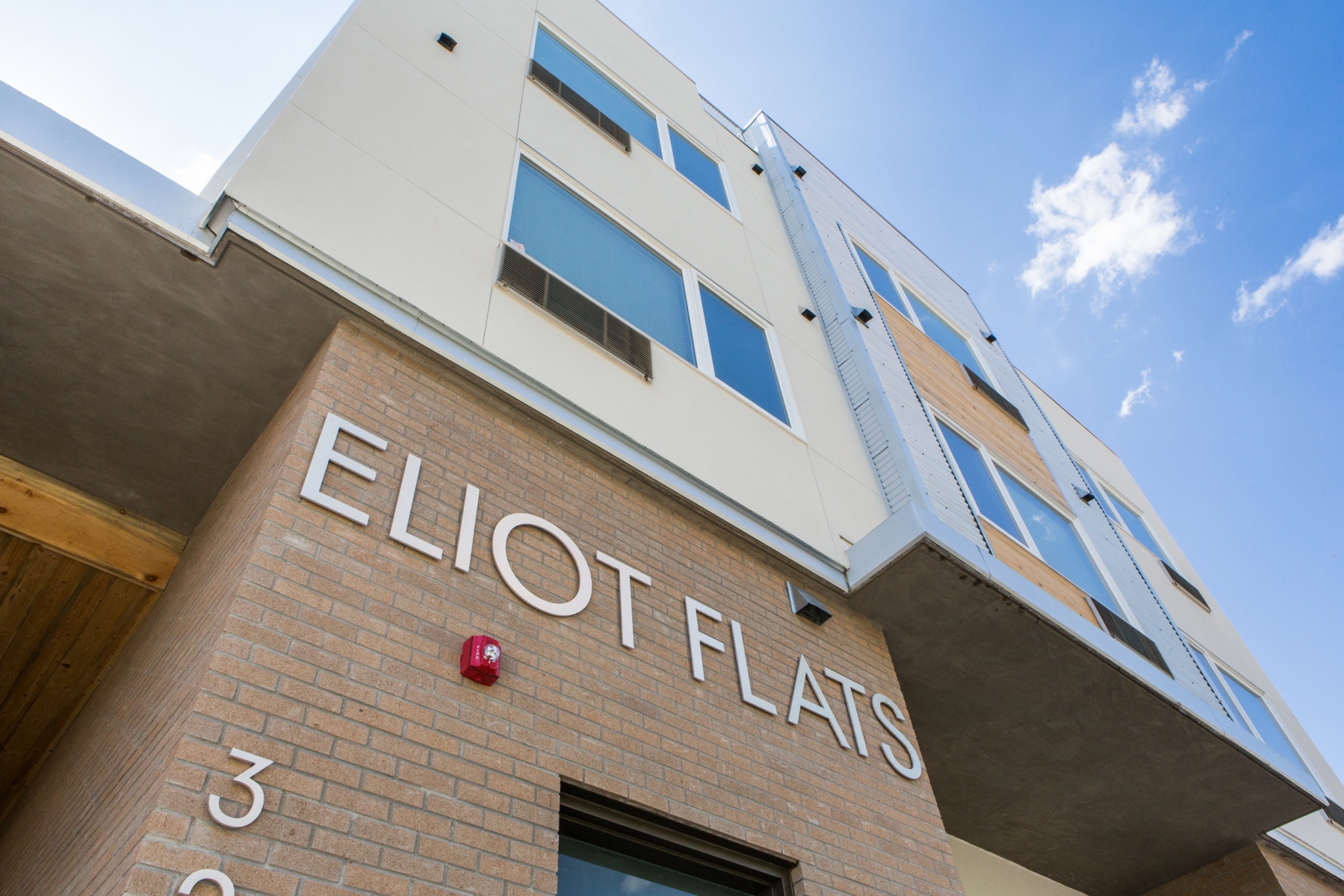
Eliot Flats is iUnit’s first multifamily development, providing a baseline project for its commercial modular building. A 40-unit rental community in the heart of the popular Lower Highlands neighborhood in Denver, the building features 30 studios and 10 one-bedroom units. It offers high walkability to restaurants, bars, running and biking trails.
Over the course of construction, more than 100 people were employed and working on the Eliot Flats project. Energy-efficient modules were constructed in a factory, shipped to the site and stacked during final construction.
The company believes the volumetric modular construction method provided a more sustainable product due to the lack of material exposure to the elements, factory-controlled construction, and use of construction materials and methods focused on achieving a tight building envelope.
iUnit is also developing the first version of its software application which will allow tenants to engage in informed energy efficiency decisions and more closely control their living environment.
Champa Flats, in downtown Denver, will be iUnit’s next project. The company will introduce its first MicroGrid system, allowing the community to generate as much energy as residents use, store it and distribute as needed. Leconte feels energy efficient and sustainable housing developments will become more widespread and common with stronger clean energy policies.
–Environmental Entrepreneurs